Monday, May 22, 2006

Press Release: New York Ocean & Coastal Protection Bill Sails Through State Assembly

Major progress in the conservation of our oceans and coasts was recently achieved when the "New York Ocean and Bays Protection Act" was passed through the Environmental Conservation Committee. The Bill now proceed to the State Senate for its next vote and continues to build on the momentum initiaed by the recommendations of the Pew and US Commissions on Ocean Policy. JB

NEW YORK OCEAN & COASTAL PROTECTION BILL SAILS THROUGH STATE ASSEMBLY
Lawmakers Clear Measure Protecting Saltwater Fisheries and Habitat

ALBANY (May 10, 2006) -- Landmark legislation to protect and revitalize New York's ocean and coastal waters won swift approval today from the full State Assembly. The New York Ocean and Bays Protection Act (A-10584), which had quickly passed through both the Environmental Conservation and Ways & Means Committees, now moves to the State Senate.

"Lawmakers in Albany realize that vital ocean and coastal habitats are in trouble, and need protection," said Sarah Chasis, Ocean Initiative Director at the Natural Resources Defense Council. "This legislation brings a new era of ocean protection with coordinated and directed marine management, and will help reestablish healthy and vibrant ocean life."

The legislation aims to improve the health of New York's coastal areas by creating a New York Ocean and Bays Protection Council, which will coordinate state marine resources decisions, encourage ecosystem-based management approaches, and ensure that accurate information about the state of coastal fisheries is widely available. It will also establish a comprehensive ocean management plan by the fall of 2008.

"An interagency Council and comprehensive New York ocean and bays plan will bring about the kind of coordinated approaches we need to save our marine life," said Robert S. DeLuca, President of Group for the South Fork. "The benefits created by this legislation will be seen at all levels of government -- from increased clarity in federal government requests to improved information for coastal communities."

"We applaud Assemblyman DiNapoli's leadership in sponsoring this important environmental legislation, and thank the Assembly for passing this bill," said Marcia Bystryn, Executive Director of the New York League of Conservation Voters. More than 40 percent of New York's coastal estuary and bay waters are impaired or threatened, according to the New York State Department of Environmental Conservation, and nearly 30 percent of the state's most important commercial and recreational saltwater fisheries are depleted or being harvested at unsustainable rates. The total weight of seafood landed in New York State today is just a quarter of what it was 50 years ago.

"Enacting the New York Ocean and Bays Protection Act will make the state a trailblazer in ocean protection," said Kyle Rabin, Executive Director of Friends of the Bay. "Oceans worldwide are languishing from neglect and quickly approaching a point of no return. A-10584 could help turn the tide."

Provisions of the bill implement key recommendations made recently by a pair of national ocean commissions -- the congressionally-established U.S. Commission on Ocean Policy and the independent Pew Ocean Commission of scientists and other leaders from fisheries, business, and government. Both commissions urged immediate action by government to save our oceans, and encouraged a move toward ecosystem-based management.

"We need to move away from a piecemeal approach to managing coastal and marine resources toward one that ensures sustainable fishing, improves water quality, protects critical habitats, and preserves food webs," said Environmental Defense marine scientist Jake Kritzer. "Integrated ecosystem-based management will require integrated action by state agencies, and this bill will provide that needed coordination." "Our ocean, bays, estuaries and coastal resources represent critical habitats for hundreds of different bird species," said David J. Miller, Executive Director of Audubon New York. "Encouraging ecosystem-based management approaches will ensure that important bird species as well as fish are protected."

Last year, the New York Assembly Environmental Conservation Committee held a hearing on New York's marine resources and Governor Pataki hosted the New York State Ocean and Great Lakes Symposium to explore how the state could address its gaps in marine protection, and become a strong leader in ocean policy. Governor Pataki was also a participant in the national Pew Ocean Commission.

"This bill is consistent with two of the major recommendations made in my testimony at the Legislative hearing, namely that New York should create its own ocean commission to evaluate the status of our marine environment and to create strategic plans for restoration and protection of its resources, and place great emphasis on ecosystem-based management of its bays and estuaries," said David O. Conover, Dean and Director of the Marine Sciences Research Center at Stony Brook University.

"New York has demonstrated strong leadership by passing the New York Ocean and Bays Protection Act," said Andrea Geiger, The Ocean Conservancy's Legislative Program Manager. "This bill will bring better coordination between agencies and stewardship of our coastal environment. It is a model of the type of responsible action we must have at the national level for our oceans."

"New York's coast features a unique combination of dense population, famously beautiful beaches and bays, and important fisheries," said Carl Safina, an award-winning nature writer and President of Blue Ocean Institute. " The New York Ocean and Bays Protection Act is a crucial step toward safeguarding and maintaining our stunning natural coastal areas, for the millions of people who love and depend on our coasts."

Read more...
http://www.nrdc.org/media/pressreleases/060425.asp

Monday, May 15, 2006

Conserving our Coasts & Waterfronts: New York State Division of Coastal Resources

As part of the CMRC's Harbor Bight Policy Initiative, we periodically explore the agencies, organizations and institutions that act as the "stewards of our estuary." Over time, this information will be compiled into an interactive guide for coastal resources in our region that will available online early 2007. Our vision is to make this "guide" a tool for decision-makers, conservation organizations and academic institutions to assist in the policy-making process and to enhance the communications on restoration and scientific research activities. Today, we explore the New York State Department of State's (DOS) Division of Coastal Resources. JB

New York State's DOS Division of Coastal Resources is responsible for the management and conservation of New York State's natural coastlines and urban waterfronts. The Division of Coastal Resources works in partnership with community groups, non-profit organizations, state and federal agencies, and local governments to make communities better places to live, work and visit.

The Division is involved in many activities related to the coastal environment. This includes supporting the conservation of coasts by providing technical assistance and the restoration of urban waterfronts through financing and planning guidance. Additional activities include:

Conserving natural coastlines and revitalizing urban waterfronts are the two top priorities of the Division of Coastal Resources. They have developed several programs to assist with the planning and funding of these efforts. For natural coastlines the focus is on preserving habitat and improving water quality through outreach, education and regulatory means. For developed waterfronts the focus shifts to land use planning, the redevelopment of brownfields and increasing public access.

The Division of Coastal Resources is also a great resource of information on funding opportunities and scientific data. Their website highlights grant opportunities for non-profit organizations and government agencies that include the Environmental Protection Fund, Quality Communities Program and Clean Water/Clean Air Bond Act. In addition, the Division is a great resource for scientific research and mapping information.

For more information on the New York State DOS Division of Coastal Resources: http://nyswaterfronts.com/index.asp

Thursday, May 11, 2006

In the News: Ships That Pass in the Morn: One Is Huge, the Other Just Scrappy

The cruise ship industry is expanding by leaps and bounds. Literally. Yesterday, the "Freedom of the Seas" oceanliner, the largest passenger vessel in the world with a price tag of over one billion dollars, made its way into New York Harbor and was greeted by the John J. Harvey, a much smaller boat with a much longer history. As the cruise industry continues to grow in our region residents will increasingly see these large ships entering our waters. The impact to our local ecosystem and waterfront communities are yet to be determined, but for now the owners at Royal Caribbean are excited about bringing this great ship to to NY in a celebration of our maritime history writes the NY Times. JB

May 11, 2006

By Aalan Feuer

If, for whatever reason, you had risen early yesterday and loitered at the bottom of Manhattan, you might have seen, among the garbage scows and the Staten Island ferries, a nautical publicity stunt coming in from sea.

The stunt involved two ships or, actually, a ship and a boat: the Freedom of the Seas, a billion-dollar, 160,000-ton behemoth, which is owned by Royal Caribbean and holds the title of the Biggest Cruise Ship in the World; and the John J. Harvey, a snub-nosed, 268-ton fireboat, which is owned by a cast of local mariners and has been chugging through the waterways around New York for more than 70 years.

The idea here was to lend a sheen of history and working-class appeal to the arrival of Leviathan, which was on its maiden voyage. The scrappy Harvey led the gleaming Freedom through the narrows, into the harbor and around the Statue of Liberty, not unlike a hound dog bounding out before a hunting expedition for the king.

"It's a great nod to New York to bring in the biggest ship in the world with all the coolest stuff on board and to fire up literally the Harvey, which very few people know about," said Rene Mack, the publicist who planned the event. "I see it as a salute to New York's maritime history, which is hard to find these days."

It is axiomatic that New York's maritime history is not only hard to find these days, but also has pretty much sunk which is one reason the Harvey's owners took the escort gig. Their boat is old, prone to floods, drinks diesel like an 18-wheeler and survives on a diet of matching grants and deductible donations. Publicity, as much as its hull, keeps the boat afloat.

Read more...
http://www.nytimes.com/2006/05/11/nyregion/11fireboat.html

Wednesday, May 10, 2006

In the News: $15M plan to help fish swim to South Shore habitat

Extending far beyond our immediate coast and waterfront, the NY - NJ Harbor Bight's watershed includes the rivers, bays and waterways that exist far upstream of our estaury. In the Hudson River, salty estuarine waters extend all the way to the Tappan Zee Bridge and the Atlantic Ocean's tidal effects can be experienced as far north as Albany. Conversely, the impacts of development upstream can strongly affect natural resources downriver. In many cases, the waterways of our region have been altered by the construction of dams and bridges that in turn limit the ability of many fish species to forage and reproduce. Fortunately, a new program in New York's South Shore Estuary is working to create bypasses to these impediments, allowing fish to move freely and thrive once again both upstream and in the bays and open ocean writes Newsday today. JB

By Jennifer Smith
May 10, 2006

Some of Long Island's dams have been here so long they've become part of the landscape.

Built to power mills or create ice ponds in the days before refrigeration, the dams also hampered age-old migratory patterns of fish such as alewives and eels that once headed upstream from the sea to mature or spawn.

Yesterday, environmental advocates and local officials announced an ambitious 10-year plan to return those fish to 30 miles of river habitat along Suffolk's South Shore. They propose building fish ladders to help fish over barriers and, where possible, removing some of the 30 dams the group has deemed obsolete."

To make this dream happen, we need to open up the rivers," said actress Isabella Rossellini, a Bellport resident and member of Environmental Defense, the national non-profit group backing the proposal.

Read more...
http://www.newsday.com/news/local/longisland/ny-lirive0510,0,6433060.story?coll=ny-main-tabheads2

Long Island's South Shore Estuary Reserve
http://www.estuary.cog.ny.us/

Thursday, May 04, 2006

In the News: As Waterfront Smolders, Attention Turns to a Failed Deal

The 10-alarm fire that broke out in the waterfront of Greenpoint, Brooklyn devastated the historic Terminal Market and decimated some of the most productive industrial property in the area. However, multiple articles are now focusing on the development history of the tract and several real estate deals that have criss-crossed its history. As with most waterfront real estate, the value has skyrocketed in recent years and developers have attempted to revitalize the property with plans for residential development. This eventually led to a tug-of-war between developers, conservationists, residents, elected officials and agency representatives over the best uses of our waterfront and who should decide whether these properties remain industrial or are converted to residential. This is indicative of many areas on our waterfront today writes the NY Times in the following piece. JB

May 4, 2006

By Michael Wilson

The 15 buildings at the Greenpoint Terminal Market in Brooklyn that were gutted in a
spectacular 10-alarm fire on Tuesday were at the center of a complex real estate deal gone wrong between established and, at times, controversial developers. They were tangling over property that was itself the target of neighborhood preservationists hoping to secure the district's legacy as a landmark.

Firefighters continued dousing the smoldering blocks along West Street and Noble Street on the Greenpoint waterfront yesterday. Officials suspect arson, and investigators were waiting for a chance to search for evidence.

The buildings are now in ruins and may be a crime scene, and even before the fire, they did not look like much to a passer-by, just relics from a bygone time when they produced bales of rope for the shipyards along the East River.

But the property's value skyrocketed last year, when a prospective buyer placed a $42 million down payment, a tenth of the entire $420 million deal, and by itself almost twice what the owner had paid for the property five years earlier. Now a lawsuit seeks the return of the $42 million and describes how the deal fell apart.

Preservationists, who had failed in recent efforts to secure landmark status for other Brooklyn buildings, started a campaign to keep the Greenpoint Terminal Market from being knocked down, seeking the support of the local city councilman, David Yassky.

Whether the site's value, its status as a landmark and the continuing legal battle have anything do with the inferno on Tuesday is unknown. Fire marshals have been unable to enter the site.
Other aspects of the investigation are already under way, however, including background checks and interviews with people connected to the warehouse complex. Nearby surveillance cameras are being examined, and investigators are checking neighbors' reports that squatters frequently used the buildings.

The buildings were owned by Joshua Guttman, 58, of Lawrence, in Nassau County, a longtime developer of industrial sites in Brooklyn, who bought the buildings in 2001 for about $25 million with an eye toward flattening them. He applied for demolition permits with the city's Department of Buildings in March 2001, but for the most part the buildings stood dormant.
That changed last year when the neighborhood zoning was revised from commercial to residential, sending brokers and prospective buyers hurrying to Mr. Guttman's door.

"Offers were being made daily on this piece," Joseph Kosofsky, a lawyer for Mr. Guttman, said yesterday. "Everybody wants to be your partner." One prospective buyer stood out: Baruch Singer, 52, a veteran developer. His offer did not have the sort of restrictive clauses and riders that Mr. Guttman found in the others, Mr. Kosofsky said.

"It was all cash," Mr. Kosofsky said. "It looked like a slam-dunk, in terms of a simple deal. They were going to buy it without any conditions or anything else."

Mr. Singer was involved in a dispute in 2000 with tenant groups and the federal Housing and Urban Development Department. The department blocked Mr. Singer from bidding on a Harlem property the department owned after it was alerted to a long record of complaints against him. Over the years, city housing officials have cited Mr. Singer's buildings for thousands of code violations.

Read more...

http://www.nytimes.com/2006/05/04/nyregion/04blaze.html?th&emc=th

Multi-media of Fire
http://www.nytimes.com/2006/05/03/nyregion/03fire.html?fta=y

Wednesday, May 03, 2006

In the News: Panel recommends building wind turbines off New Jersey coast

The issue of offshore energy is dominating our headlines more than ever as the high prices of petroleum-based products push the market towards a sustainable means for generating power. Two major alternatives - liquefied natural gas (LNG) and wind power - could potentially affect our local energy markets and coastal environment simultaneously. Several LNG facilities are being planned along the eastern seaboard, with one proposed directly outside the mouth of the NY - NJ Harbor Estuary. In addition, several projects have proposed placing wind farms adjacent to the our coastlines to supplement current energy production in the region. Wind farms have been a controversial issue for conservationists and decision-makers alike, as the potential costs and benefits of this type of energy production are just now being discovered. In New Jersey, a Blue Ribbon Panel was asked to determine the potential impacts to the coastal environment and local energy markets and their findings suggested that the State go forward with a "test project" of 80 turbines offshore, potentially opening the door for wind power throughout the region states the Asbury Park Press in the article below. JB

Asbury Park Press 05/3/06

By Todd B. Bates and Kirk Moore

A "test project" with up to 80 wind turbines should be built off New Jersey's coast to learn more about the potential impact and benefits of offshore wind power, a state panel recommended.

But the potential impact may be significant and New Jersey must stress conservation before pursuing energy facilities in the ocean, according to a minority report included in the package.

"I will closely review the panel's findings and recommendations and consider them while working to shape New Jersey's energy and coastal policies," Gov. Corzine said in a state Department of Environmental Protection statement e-mailed Tuesday.

Tony Bogan of Bogan's Deep Sea Fishing Center in Brielle said "it's hard to react without knowing specifically where (the test project) would go."

"I'm encouraged by the fact that they're taking a step-by-step approach," Bogan said of the report.

The final report to Corzine of the Blue Ribbon Panel on Development of Wind Turbine Facilities in Coastal Waters is the culmination of months of work.

Then-Gov. Richard J. Codey created the nine-member panel in December 2004 and established a 15-month moratorium on the development of offshore wind turbines. The panel was to consider the environmental and economic costs and benefits of turbines and make recommendations on their appropriateness.

The report recommends studies before, during and after the construction of an offshore wind turbine test project. The project would generate as much as 350 megawatts of electricity and have as many as 80 wind turbines.

Read more...
http://www.app.com/apps/pbcs.dll/article?AID=/20060503/NEWS/605030479

NJ Wind Panel Report

http://www.njwindpanel.org/

Monday, May 01, 2006

In the News: Sewage Beach - Summer’s almost here, and things are getting excrementally worse with our water.

CSOs, or combined sewage outfalls, are a hot button topic in the New York - New Jersey Harbor Estuary right now and many news articles and events have been researching and reporting on the issue. CSOs are outfall pipes that release a mix of stormwater runoff and raw sewage when rains of approximately one-tenth of an inch or greater fall in our region. The end result is that the waters the Harbor Estuary become polluted with bacteria and chemicals, making for unswimmable and unfishable conditions. State Senator Velmanette Montgomery recently held a public forum on CSO's and the Gowanus Canal that explored the impacts and potential solutions to the problem of wastewater and our coastal environmental. The major solutions as of now appears to be billion dollar infrastructure improvements, however some hope that these "end-of-the-pipe" resolutions are complemented by other forms of conservation and restoration like green roofs on new developments writes New York Magazine. JB

By Eric Wolff
May 1, 2006 issue of New York Magazine

Is New York flushing away its summer fun? Our century-old sewer system is already so overburdened that it overflows 70 days a year dumping 27 billion gallons of waste into the city's waterways, just as high-rises are going up on their banks. (Even the ever-fetid Gowanus Canal is being lined with housing.) Last summer, two city beaches were closed because of high bacterial levels; experts say all this building is going to make the problem worse. And while it's still pretty safe to kayak on the Hudson this summer, within ten years, I could easily see beaches closing for much of the summer season, says biophysicist Paul Mankiewicz of the Gaia Institute.

All it takes is a tenth of an inch of rain falling in an hour a tenth! for the sewer system to start emptying into the rivers. It's partly a problem of neglect: In 1992, the city's treatment plants were in such disrepair that the state's Department of Environmental Conservation sued under the Clean Water Act; the city has never allayed the DEC's concerns, and the State Supreme Court upheld a $13.9 million fine against the city last April.

Meanwhile, the city's population has edged over 8 million, and the Department of Planning is expecting at least 37,000 new apartments citywide in the next ten years. We're operating under the assumption the sewers can handle it, says a spokeswoman for the city's Department of Environmental Protection. If we didn't think so, developers wouldn't get a permit to connect to the system. And that's all we have to say.

Read more...
http://www.nymetro.com/news/intelligencer/16805/

Gowanus CSO Forum
http://www.brooklyncb6.org/calendar/?current=01-Apr-06

Apr 27 Gowanus Canal CSO Public Forum
State Senator Velmanette Montgomery, Brooklyn Community Board 6 and local elected officials are co-sponsoring a Public Forum on Combined Sewage Outfalls (CSO's) flowing into the Gowanus Canal. Representatives from the U.S. Army Corps of Engineers, NYS Department of Environmental Conservation and the City's Department of Environmental Protection will be on hand to report on their efforts to improve the environmental condition of the Gowanus Canal and answer questions from the public. Also participating will be representatives for Friends and Residents of the Greater Gowanus (FROGG), Gowanus Canal Community Development Corporation (GCCDC), and Urban Divers.

Tuesday, April 25, 2006

Exploring Our Coasts & Waterfronts: St. George, Staten Island

As part of the CMRC's Sustainable Coasts Program, we periodically explore the coastal communities that play a large role in the Harbor Estuary's socio-economic and ecological well-being. Today we look at the community of St. George on Staten Island and its rich maritime history and current revitalization. The area has long been a very active part of New York City's maritime culture and is most popular for the Staten Island Ferry, which moves passengers between St. George and downtown Manhattan. The region was heavily affected by the development of the Verrazano Narrows Bridge in 1964 that shifted Staten Island's economy to the center of the island. However in recent years St. George has undergone a major revitalization with residents finding a very livable community (with a new baseball park) and easy access to downtown Manhattan. The article below from Newsday explores the community of St. George and its recent revitalization in more depth. JB

By Alan Krawitz
April 20, 2006

Located at the northeastern tip of Staten Island where the Kill Van Kull enters Upper New York Bay, St. George, also known as "Downtown Staten Island," has seen its share of ups and downs since the early 20th century.

Once dominated by 19th-century Victorian homes and mansions, the area now offers trendy housing options such as the upscale Bay Street Landing condo complex, newly constructed high-rises and Manhattan-style townhouses. Actor Paul Newman is said to have lived in the area during the mid-1960s.

Richmond Terrace in St. George is not only the administrative center of the borough but also a transportation and entertainment hub with its ferry/bus/railway terminal, the Richmond County Bank Ballpark, home of the New York Yankees minor league ball club and the St. George Theatre.

The area, once considered part of the New Brighton neighborhood, reportedly was renamed after George Law, a local investor who was involved in the consolidation of ferry and rail service.
The neighborhood grew rapidly in the early 20th century as municipal ferry service to Manhattan commenced in 1905.

Downtown Staten Island experienced a downturn in 1964 following the construction of the Verrazano-Narrows Bridge that shifted development and commerce to the interior of the island.
Today, the consensus is that the area is in the midst of a resurgence fueled by a combination of rising property values due to new construction, redevelopment of the waterfront and an easy commute to Manhattan.

Read more...
http://www.newsday.com/news/local/newyork/am-city0420,0,3188505,print.story?coll=ny-nycnews-mezz

St. George Civic Association
http://www.preserve.org/stgeorge/

Google Map of St. George
http://maps.google.com/?ll=40.642354,-74.077635&spn=0.028526,0.05785&t=h&om=1

Wikipedia - St. George
http://en.wikipedia.org/wiki/St._George,_Staten_Island

Thursday, April 20, 2006

CMRC Participates in Planning and Redevelopment of Piers 7-12

The CMRC recently took part in a planning workshop to create a detailed vision for the redevelopment of Brooklyn Piers 7-12. Facilitated by the New York Economic Development Corporation (EDC), the event brought together many of the region's stakeholders to comment and brainstorm ideas for integrating a variety of uses on the waterfront. Historically the area has been an industrial area and many hope to retain that aspect of Red Hook's history while adding residential, commercial and open space opportunities to the landscape. Currently, the cruise terminals are occupying the spaces at the southern end of the Piers and the EDC is determining how to connect these uses with public access and community interaction. Below is an excerpt from the EDC website with presentations from the workshop. JB

Brooklyn Piers 7-12

NYCEDC is undertaking a planning and redevelopment initiative to help guide the future of Brooklyn Piers 7-12.

The guiding principles for redevelopment would include:
Sustaining and enhancing Red Hook's maritime identity;
Creating new economic development opportunities and jobs;
Providing waterfront access;
Improving transportation (on water and land); and
Strengthening connections between upland neighborhoods and the water's edge.


As we progress with this initiative, we will be posting additional information on this site. We look forward to your input.

Presentations and Public Documents:
Community Board 6 Presentation (April 3rd, 2006)
http://www.nycedc.com/Library/Studies/Piers7-12workshop20060403.pdf

Community Board 6 Presentation (November 28th, 2005) (pdf)
http://www.nycedc.com/Library/Studies/7-12PlanningNov28Revised.pdf

Community Board 6 Waterfront Committee
http://www.brooklyncb6.org/committees/?a=detail&content_id=45

Google Map of Brooklyn Piers 7-12
http://maps.google.com/?ll=40.685552,-74.008627&spn=0.014124,0.028582&t=h&om=0

Monday, April 17, 2006

Multimedia: The New York City Waterfront

As our waterfront becomes more and more accessible, it is increasingly being exposed to the millions of residents in the New York metropolitan region. One group that has recently taken a strong interest in the Harbor Estuary is the artist community. Recently, many great photos and paintings have appeared in local magazines and art galleries, showing that conservation and public access influence a world beyond what lies in the immediate foreground of science and policy. The following article and multimedia piece by the NY Times explores the journey of two photographers as they explore our coast. JB

April 16, 2006
By Ben Gibberd

EVERY New Yorker knows that something's afoot. Bike paths and benches have sprouted along the Hudson like tender shoots. Formerly obscure waterfront neighborhoods such as Red Hook and Dumbo are spoken of with that peculiar ardor reserved for the perfect nexus of hipness and real estate value.
And everywhere, in every borough, there are plans to rezone and rebuild, to tear down and to preserve along the city's edges.

That strange and melancholy frontier where the human-made fizzles out and Nature begins (a state both longed for and innately distrusted by every New Yorker) is once again being rediscovered as a source of energy and life.

Into the scrum of preservationists, developers, maritime interests, politicians and ordinary New Yorkers, each fighting for a particular vision of the waterfront, come Diane Cook and Len Jenshel, a husband-and-wife photography team who have spent the past three years documenting the city's infinitely convoluted 578 miles of shoreline. The aim of their project, which has received funding from the Design Trust for Public Space and the New York State Council on the Arts, is not to take sides but simply to show what is there.

Read more...
http://www.nytimes.com/2006/04/16/nyregion/thecity/16feat.html

Friday, April 14, 2006

In the News: The Oceans Resurface

How to best balance scientific information with industry and community needs in the creation of effective coastal management policies is again at the forefront of decision-makers agenda in our Nation's Capital. Building on the momentum of the Pew Oceans Commission and US Commission on Ocean Policy, multiple bills in Congress are attempting to solve this challenging question. However, to date very little has actually been done at the Federal level and as a result many are calling for immediate action. Two new bills are looking to rework the current fisheries management law, known as the Magnuson - Steven Fishery Conservation Act, but both are still struggling with determining the correct balance of science and community-based information from industry and others for creating legislation that provides for both economic and environmental security writes the NY Times in the Editorial below. JB

Published: April 14, 2006

Despite extensive studies demonstrating the poor health of America's coastal waters as well as its major fisheries and offering blueprints for recovery, Congress has done nothing. Now, at last, the matter is getting some traction. This is good news. But the important thing is to get it right.

At issue is the reauthorization of the Magnuson-Stevens fishery conservation act, the basic law governing federal fisheries policy. The act does not address many issues that need attention. But strengthening it would help fish populations in American coastal waters, which extend 200 miles off shore, and that is no small thing. Many of those populations for which there is reliable data — among them Alaskan pollock, Pacific rockfish, redfish in the Gulf of Mexico — are struggling. Some, like North Atlantic codfish, have essentially crashed.

A Senate committee has reported its version of the bill. It retains all of the good elements of the act, which requires the country's eight regional policy-making councils to identify declining fish stocks and create plans to rebuild them. But it largely ignores two excellent ideas for improving it that were advanced by the privately financed Pew Oceans Commission and the Congressionally chartered United States Commission on Ocean Policy.

One was to give scientists much greater influence in the regional councils, which are now dominated by industry representatives whose short-term interest lies in catching more fish than is healthy for the species' long-term survival. The other was to require the councils to set annual, enforceable catch limits. Partly because of opposition from Northeastern senators politically beholden to local fishing interests, the committee abandoned the idea of hard targets and gave the scientists no more than an advisory role.

Read more...
http://www.nytimes.com/2006/04/14/opinion/14fri2.html?_r=1&th&emc=th&oref=slogin

Wednesday, April 12, 2006

In the News: A ray of sunshine in state's renewable energy picture

Located just a stone's throw west of Manhattan lies one of the largest natural ecosystems found in our region - the New Jersey Meadowlands. This great expanse of estuary habitat, once a major dumping ground for the City's trash and then home to large-scale development projects, is currently thriving as a result of increased protection and restoration efforts to conserve its many acres of marsh and adjacent uplands and the many species that inhabit the region. A new plan introduced recently by the New Jersey Meadowlands Commission will build upon the great successes of the environmental community and attempt to create one of the largest renewable energy networks in the world by 2020. The plan calls for solar, wind, geothermal and tidal energy to replace current modes of energy production, and offers potential economic and environmental benefits that will include improved air and water quality states the following article from the Star-Ledger. JB

Tuesday, April 11, 2006
BY Ana M. Alaya Star-Ledger Staff


Plans outline massive solar, wind and tidal network in the Meadowlands

Harnessing energy from the sun, wind and tides, the Meadowlands region could become home to one of the largest renewable energy networks in the world in the coming years, state officials said yesterday.

Plans unveiled yesterday call for a 5-megawatt solar energy system in the next few years, and a 20-megawatt system of alternative energy power by 2020 that could produce electricity for thousands of homes in the Bergen-Hudson county region, said officials of the New Jersey Meadowlands Commission.

The commission's board approved measures yesterday to seek private companies to build the energy systems. At the same time, the agency will try to attract cutting-edge technology companies to the region's obsolete warehouse districts.

"This project will provide enormous environmental and economic benefits for the Meadowlands District, as well as set a precedent for the state's commitment to renewable energy," said New Jersey Department of Community Affairs Commissioner and NJMC Chair Susan Bass Levin. "The Meadowlands District has the infrastructure and recent history of regional cooperation needed to implement this renewable energy initiative."

A commission study done over the past several months concluded that the district can offer much of the 1.3 million square feet of space that a 5-megawatt system would need for silicon solar panels that turn the sun's energy into electricity.

Much of that space may already be available on NJMC properties, including roofs, parking lots, garages and cleaned landfills in the 32-square-mile region, officials said.

The NJMC also will create a Renewable Energy Task Force for the Meadowlands District that will be responsible for developing a master plan for the region over the next year. This renewable energy plan will develop a strategy for the creation of 20 megawatts of renewable energy in the region by 2020. The panel will examine solar, tidal, wind, geothermal and other sources of renewable energy.

Read more...
http://www.nj.com/search/index.ssf?/base/news-3/114473746894780.xml?starledger?nnj&coll=1

Friday, April 07, 2006

In the News: Asbury Park in New Pact to Restart Development

Over the past year, the CMRC has worked extensively with the Surfrider Foundation and Ford Foundation in an effort to assist in the redevelopment of Asbury Park, NJ (see note below). The City of Asbury Park, once known as a playground for the wealthy, had fallen into challenging economic times in recent decades, but is now again reclaiming its place as a destination on the Jersey shore. However, past attempts to revitalize the city have been wrought with corruption and failed miserably leaving shells of former buildings as a constant reminder. The most recent wave of redevelopment, headed by Asbury Partners LLC., appears to be on its way to recreating the waterfront and downtown, but is being watched very closely by City officials as to not repeat previous failures. This recent NY Times article explores the most recent development efforts and how the local community is working with the development community to assure that the revitalization goes forward to completion this time. JB

Note: The CMRC has been working with the Surfrider Foundation and Ford Foundation to explore the impacts of coastal development on low-income communities and recently completed a report providing potential solutions that increase public access and sustainable job opportunities based on opportunities available at the shorefront. Stay tuned for updates on that effort at www.cmrc.org and here at the Blog.

April 7, 2006
By Ronald Smothers

ASBURY PARK, N.J. - Asbury Park's hopes of redevelopment have been frustrated by more than a decade of failed plans, bankrupt developers and corruption.

But the city's prospects took a step forward this week when it reached a new agreement with its development partner to speed the refurbishment of the city's sagging Convention Hall, dilapidated casino and Boardwalk pavilions, and to quickly resolve disputes that have bogged down progress in the past.

The agreement is a result of nearly six weeks of negotiations between city officials and Asbury Partners, its redeveloper, after council members and others grew impatient with the slow pace after the city turned over the Boardwalk buildings to the company in 2001.

Critics of Asbury Partners had threatened to press for the developer's ouster if there was no agreement on strict timetables to complete the work and assurances that the developer was financially able to do so. Under the contract, Asbury Partners is to oversee the redevelopment of the buildings and a 56-acre parcel of shorefront.

The developer has also agreed to put in escrow an amount equal to 25 percent of the estimated $6 million in work on the Boardwalk buildings, obtain performance bonds for each project and provide periodic financial statements detailing its net worth and any significant changes in its finances.

One of the key provisions of the new agreement, said Terence J. Reidy, the city manager of Asbury Park, was a dispute resolution process that involves an arbitrator with the power to settle disagreements and to dictate remedies. The goal is to resolve disputes within 60 days. Mr. Reidy said that the only recourse for the city in past disputes had been to find the redeveloper in default, a move that often led to court battles.

Read more...
http://www.nytimes.com/2006/04/07/nyregion/07asbury.html?_r=1&oref=slogin

City of Asbury Park
http://www.cityofasburypark.com/

Asbury Partners, LLC
http://oceanfrontasbury.com/asbury_partners.htm

Thursday, April 06, 2006

In the News: Plans for Pier Bogged Down in a Dispute With the City

As our waterfronts continue to undergo revitalization many businesses are beginning to take advantage of potential opportunities to provide a residents and tourists with a wide variety of water-based activities. However, in some cases the deterioration of piers, bulkheads, and pathways leads to challenges for both City officials and local business owners. One of the fastest growing industries on our waterfronts is the transportation and eco-tourism business. Several companies are currently offering "Harbor Tours" to those interested in seeing the NY metropolitan region in a different light. Unfortunately, in the case of the New York Waterway Tours, a dispute over the condition of Pier A in downtown Manhattan has led to uncertainty for the future of their water-based tourism business writes the NY Times. JB

April 6, 2006
By Patrick McGeehan

For nearly two decades, city officials have hoped to see Pier A, a historic landmark at the northern edge of Battery Park, revived as a tourist attraction on the downtown waterfront. But the latest attempt to make commercial use of the 120-year-old pier is bogging down in a dispute between the city and an ambitious ferry operator.

The operator, New York Waterway Tours, planned to start offering hourly harbor cruises from the pier next week. But the city's Economic Development Corporation has refused to grant permission to reopen the pier, which is leased to a company controlled by one of the owners of the tour-boat operator.

The man behind the plan for the harbor cruises is William B. Wachtel, a Manhattan lawyer with designs on reviving the city-owned Pier A as a transportation center. He hopes it will serve as a hub for commuters traveling to and from New Jersey as well as tourists to the Statue of Liberty and Ellis Island.

His efforts are being closely watched by competitors in the city's small but contentious ferry industry.

"Circle Line continues to support efforts to upgrade Pier A, and though we have seen activity of a sightseeing business, we are not aware that it has received approval from appropriate agencies," said J. B. Meyer, the president of Circle Line Harbor Cruises, another tour operator.
Mr. Wachtel controls Wings Point Associates, which is leasing the pier, and the BillyBey Ferry Company, which he created a year ago to bail out the struggling operator of the Waterway ferries. BillyBey owns half of the Waterway fleet and half of an excursion business, New York Waterway Tours.


Last week, workers for the tour company started gearing up to start hourly cruises of the harbor from the pier. A schedule for the cruises, beginning April 14, appeared on Waterway's Web site and a trailer that would serve as a ticket office appeared at the edge of Battery Park. Other boat operators reported seeing boats making test runs from the pier. A spokesman for the United States Coast Guard, Petty Officer Mike Lutz, said yesterday that the Coast Guard had granted a permit to Waterway for excursion cruises to operate from Pier A beginning around April 14.

Read More...
http://www.nytimes.com/2006/04/06/nyregion/06ferry.html

NYC Economic Development Corporation
http://www.newyorkbiz.com/

New York Waterway Tours
http://www.nywaterway.com/sightsee_fullday.html

Monday, April 03, 2006

CMRC Business Stewardship Workshop Report Released

On February 16, 2005 the CMRC and its partners facilitated a half-day workshop in conjunction with our Business Stewardship Initiative, an effort which brings together the resources of local industry with conservation efforts, to discuss the opportunities and constraints of creating partnerships and implementing restoration projects in the NY - NJ Harbor Estuary. The workshop attracted over 30 participants from the conservation and business communities, each of whom contributed to the workshop's panel discussions and final "working session." A synopsis of the day's activities can now be found in the Workshop Report and PowerPoint Summary, with conclusions and next steps outlined in the Executive Summary (below). One of the major recommendations of the workshop was to create a Business Stewardship Speaker Series that showcases local businesses and their coastal conservation efforts in the region. Stay tuned for more on the Speaker Series and on the Business Stewardship Initiative as we go forward! JB

CMRC Business Stewardship Workshop Summary (PowerPoint)http://thecmrc.org/docs/BusinessStewardshipWorkshopSummary.ppt

CMRC Business Stewardship Workshop Report http://thecmrc.org/docs/BusinessStewardshipWorkshopReport.doc


EXECUTIVE SUMMARY

On February 16, 2006 the Coastal Marine Resource Center of New York (CMRC) and its partners convened a Harbor Estuary Business Stewardship Workshop to identify focus areas and next steps for developing a Business Stewardship Program. The event was attended by thirty business and environmental leaders in the region and included a series of panel discussions that generated ideas and recommendations for developing a Businesses for the Harbor program.

Based on the findings of the workshop, the CMRC and its partners will be going forward with the following next steps towards the creation of a Businesses for the Harbor program:
  • Formation of a Business Stewardship Workgroup with six to eight members
  • Continued outreach to stewardship programs both within and outside the Harbor
  • Facilitate additional focus groups with business and conservation organizations
  • Development of Businesses for the Harbor program structure and goals by 2007

The Chesapeake Bay’s Businesses for the Bay (B4B) Program shared the successes of their voluntary stewardship program during the first session. In the past decade, B4B has signed up over 700 businesses as member organizations in an effort to improve pollution prevention in the Chesapeake. In addition, nearly 140 organizations have been established as mentors that provide technical knowledge to other businesses striving to reduce the environmental impacts of their activities. A major component of the B4B Program is a well-developed reward and recognition program that provides excellent visibility for member organizations.

Businesses showcased their stewardship experiences during the second panel session and presentations from NY Water Taxi, Patagonia, the Brooklyn Navy Yard, and Credit Suisse provided insight into how different sectors approach environmental and social issues. Highlighted were the ranges of opportunities for collaboration available for stewardship in the region. While some organizations leverage human resources to implement conservation projects, others conduct pollution prevention activities upstream to reduce their environmental impact.

During the Stewardship in the Harbor Estuary session representatives from the private, non-profit, and government communities discussed their conservation efforts locally. Presentations from the New York Shipping Association (NYSA), the Hudson River Foundation – Harbor Roundtable, and EPA Performance Track showcased a variety of techniques that have achieved success by bringing together knowledge, human resources, and conservation goals. NYSA, for example, assists the maritime industry in reducing their air and water quality impacts, while the Harbor Roundtable is developing a funding strategy for restoration projects within the estuary.

Finally, participants identified and refined focus areas for developing a Business Stewardship Program during the “working session.” Participants agreed that business stewardship is an important topic and provided a great range of ideas on sectors and stewardship focus areas to be considered during program development. The general consensus was that the program needs to: offer businesses guidance on how to best use their resources to benefit conservation efforts; and, provide a visible recognition program that rewards participants as “Stewards of the Estuary.”

CMRC Business Stewardship Workshop Summary (PowerPoint)
http://thecmrc.org/docs/BusinessStewardshipWorkshopSummary.ppt

CMRC Business Stewardship Workshop Report
http://thecmrc.org/docs/BusinessStewardshipWorkshopReport.doc

Friday, March 31, 2006

In the News: Crab egg harvesters could get state money during moratorium

Balancing the needs of aquatic species with the financial concerns of fishermen in New Jersey, the State recently suspended the harvesting of horseshoe crabs and provided $168,000 in aid to local fishing businesses. The move alleviates the environmental pressures being placed on crab and should provide more time for the species to reproduce while also enhancing the overall ecosystem by providing food for migratory shorebirds who feed on horseshoe crab eggs. Fisherman weren't completely happy with the outcome however, countering that the species was healthy and could sustain continued commercial harvesting states this recent article by the Asbury Park Press. JB

Posted by the Asbury Park Press on 03/31/06
BY KIRK MOORE
TOMS RIVER BUREAU

GALLOWAY - New Jersey's last 34 licensed horseshoe crab harvesters could get $168,000 in financial aid over two years while the state enforces a moratorium on taking the crabs for commercial fishing bait, state environmental Commissioner Lisa Jackson and environmental activists said Thursday.

Faced with the Corzine administration's apparent determination to shut down the horseshoe crab business for two years — to maximize the crab eggs available to feed migrating shorebirds — the state Marine Fisheries Council last night voted to go along.

To oppose the Department of Environmental Protection could have led to legislative action to shut down crab harvests, said council Chairman Gilbert Ewing Jr., who voted with the majority against a move to reject the moratorium.

Read more...
http://www.app.com/apps/pbcs.dll/article?AID=/20060331/NEWS03/603310381/1007

In the News: Swimmers From the North Delight Scientists and Sightseers

Efforts to clean up the often neglected NY - NJ Harbor Estuary have increasingly shown benefits for people and wildlife alike. Over the past five years, one particularly noticeable marine mammal, the harbor seal, has visited the region with more and more regularity. Recently, several seals were spotted off Hoffman and Swinburne Islands in the lower New York Harbor/Bay. The question that many scientists continue to ask though is, "are the harbor seals visiting with more frequency because of improved water and habitat quality and, if so, what pollutants are they being exposed to when visiting the highly urbanized waters of our estuary?" The results of studies looking into those questions will take some time to come to light, but in the meanwhile scientists and local residents are enjoying the presence of this charismatic species in our waters writes the NY Times. JB

By Andy Newman
Published: March 25, 2006

The inhabitants of Hoffman and Swinburne Islands, man-made piles in Lower New York Bay off Staten Island, have tended to be there not because they particularly want to be, but because they have to.

In the 19th century, the islands were a holding area for new immigrants feared to be carrying diseases. Later, they housed soldiers with venereal disease, quarantined parrots and, until the 1940's, merchant marines in training.

But yesterday the 20 plump bathers lazing on rocks in front of ruined hospital buildings and paddling the flat waters off Swinburne had come of their own free will, and they seemed to be having a fine time. And for the scientists and students on a nearby boat, this was a very good thing.

The bathers were harbor seals, bewhiskered 250-pound ambassadors from the icy north, and they appeared as oblivious to the traffic whizzing by on the Verrazano Narrows Bridge two miles away as the drivers above were to them.

A few seals were first noticed on the islands in 2001, after decades of absence from New York Harbor. But as the seal population along the Atlantic coast has continued to recover and their wintering range has extended southward, the seasonal seals of Swinburne have returned and flourished.

Read more...
http://www.nytimes.com/2006/03/25/nyregion/25seals.html

CRESLI harbor seal page
http://www.cresli.org/cresli/seals/hbrseals.html

Monday, March 27, 2006

Conserving our Coasts & Waterfronts: The New York City Council's Committee on Waterfronts

As part of the CMRC's Harbor Bight Policy Initiative we periodically explore the different government agencies, elected officials, conservation organizations, and academic institutions that are involved with coastal conservation in the Harbor Bight. This week's installation takes a brief look at the New York City Council's Committee on Waterfronts and their recent efforts to protect and restore our coastal marine resources. JB

The New York City Council is composed of 51 elected officials who are responsible for representing the voices of millions of constituents throughout the five boroughs. A majority of the City Council's work takes place in multiple committees and subcommittees that focus on specific topics of concern such as education, health and the environment. One of the most important of these groups for our coastlines is the NYC Council's Committee on Waterfronts.

Previously chaired by Councilman David Yassky, the Committee recently inducted a new representative, Michael Nelson of Brooklyn, as its Chair for the upcoming term. Other members of the Waterfronts Committee include:
  • Joseph P. Addabbo, Jr.
  • Gale A. Brewer
  • Vincent J. Gentile
  • Alan J. Gerson
  • Melissa Mark Viverito
  • James Vacca

As part of the Committee's responsibilities, its members convene monthly to introduce new legislation and discuss important waterfront matters. The most recent meeting of the Committee was held on February 16th, 2006, and was classified as an "organizational meeting" to set the agenda for the group in the current legislative session. Several topics were identified during that meeting as critical to maintaining the waterfronts of the Harbor as an environmental and economic resource in our region. Major agenda items included:

  • Port Maintenance and Development
  • Waterborne Transportation
  • Parks and Open Spaces
  • Environment

In addition, the City Council and its committees are responsible for introducing legislation that affects the residents, businesses and natural resources in the region. Recently, multiple laws were introduced by the City Council's committees that would potentially benefit the local coastal environment and our waterfronts. They are:

Int. No. 97 by Council Members McMahon, Fidler, Foster, Gentile, Koppell, Mark-Viverito, Nelson, Recchia Jr., Sanders Jr., Weprin, Lappin, Liu and Lanza. A local law to amend the administrative code of the city of New York in relation to reducing the emission of pollutants from marine vessels that handle, transport or dispose of the City's solid waste and recyclable materials.

Int. No. 188 by Council Members Yassky, Brewer, Fidler, Gentile, Koppell, Mark-Viverito, Monserrate, Nelson, Recchia Jr., Sanders Jr., Weprin, Foster, Vallone Jr. and Lanza. A local law to amend the administrative code of the city of New York, in relation to creating a plan to combat illegal dumping into the waterways of New York City.

Int. No. 189 by Council Members Yassky, Brewer, Fidler, Gentile, Mark-Viverito, Nelson, Recchia Jr., Sanders Jr., Weprin, Foster, Vallone Jr. and Lanza. A local law to amend the administrative code of the City of New York, in relation to increasing fines for violations of the law for illegal dumping along Waterfront property into New York City waterways.

Each of these pieces of important legislation, if and when adopted, will certainly have a positive impact on our local coastal resources. The New York City Council Committee on Waterfronts is a great example of democracy in action and with their continued good work we can look forward to increased conservation and restoration of the Harbor Bight.

For more information...

NYC City Council

http://www.nyccouncil.info/index.cfm

Committee on Waterfronts

http://www.nyccouncil.info/issues/committee.cfm?committee_id=104&ltsbdkey=5123

Monday, March 20, 2006

Exploring Our Coasts & Waterfronts: Barbados, West Indies

CMRC's Sustainable Coasts Program periodically explores different shores and waterfronts to facilitate an information exchange among coastal communities and increase the knowledge of regional conservation and management practices worldwide. As part of this effort, the CMRC examines the social and economic history of these areas and describes the environmental issues facing coastal communities today. In this issue of Exploring Our Coasts & Waterfronts, we focus on the socio-economic and conservation issues found in the eastern Caribbean island of Barbados. JB

Located deep in the Lesser Antilles, Barbados is the easternmost island found in the windward Caribbean. Its unique geographic positioning, rich history and heavily British influenced culture make the island one of the most desirable locations to live and visit in the Northern Hemisphere. Barbados is positioned approximately 100 miles east of the islands of St. Lucia, St. Vincent and Grenada and is several hundred miles north of the South American Countries of Venezuela, Guyana and Suriname.

The island itself is relatively small measuring about 20 miles long by 10 miles wide. However, the country is packed with a high diversity of natural resources that include traditionally productive agricultural lands and amazing coastal ecosystems that are home to numerous tropical species of wildlife and plants. In addition, Barbados is one of the most highly populated areas of the eastern Caribbean, with almost 300,000 individuals inhabiting the island, and many, many more coming to visit each year.

Barbados - known by many as the "little England of the Caribbean" - was under British control for nearly 350 years leading up to its independence in 1966. For several hundred years the economy of Barbados was strongly agricultural, anchored by a thriving sugar industry and byproducts such as rum and molasses. In addition, the region produced several other local agricultural crops including yams, sweet potatoes, peanuts and cut flowers. Today Barbados is a independent state of the Commonwealth and keeps close ties with UK culture (especially in their love of the sport of cricket).

More recently, the local economy has shifted dramatically towards revenues from tourism associated activities. In 1970, tourism officially overtook agriculture as the island's number one source of income. Today nearly 75% of the islands GDP is derived from visitors to the island who come from near and far to enjoy the wonderful natural resources and exceptional weather the island has to offer.

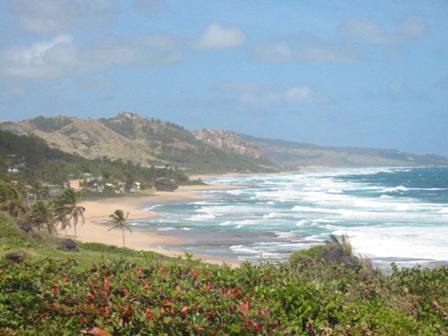
The environmental resources of Barbados continue to be the centerpiece of the economy and "Bajan" (pronounced bay-jun) culture. Numerous beaches fringe the island and many coastal communities are based on ocean uses that have historically included fishing, swimming and boating. On the country's east coast, near Bathsheba, amazing beaches, rolling mountains and powerful surf are on display. The Bathsheba region has remained quite rural over the years and still retains its agricultural feel.

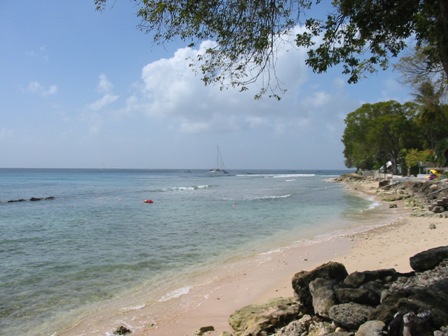
Near the west coast centers of Speightstown and Holetown the beaches are considerably calmer, and consequently many of the island's resorts have set up along the coast. The end result of the increasing development pressures has led to some environmental issues along the coast. However, the region is still rich in coastal resources, including amazing coral reefs with a multitude of colorful aquatic species such as barracuda and groupers; several species of sea turtles; and, many birds that patrol the nearshore zone for sustenance.

Bridgetown, the country's capital, is located in the protected southwest of the island. This area, when combined with the southern portion of the island, is the most developed and home to a large portion of the population. The capital contains major ports for both the local fishing fleet (flying fish is the national dish) and a thriving cruise industry. The southern portion of the island still contains many beautiful beaches despite the large amount of development.

The environmental challenges have recently come to the forefront of Barbados life. Continuing development of the tourism industry, especially in the coastal zone, has led to management issues such as habitat and species impacts, as well as increased pollution from stormwater runoff. While many beaches in the eastern shore have remained unspoiled, the western shore now has numerous shore protection structures, including seawalls, jetties and groins that accelerate erosion. Increasing pressures on infrastructure due to the rapid development of coastal resorts and golf courses has led to many pollutants draining directly to the ocean due to the limited treatment facilities and catchment basins. In addition, the popularity of eco-tourism related activities has led to a very active nearshore zone that is affected many aquatic species. Most notably, the practice of feeding sea-turtles has led to obesity in many of the local turtles.

Fortunately, a few groups are actively minding the shores to ensure that the coasts of Barbados remain both environmentally and economically viable. The Barbados Sea Turtle Project works to conserve the green, hawksbill, leatherback and loggerhead turtles that are found in the area's waters. The Project especially focuses on protecting the eggs and breeding beaches found along the shores of the island and also is examining the interaction of humans with different species to assist in developing a sustainable eco-tourism industry.

In addition, the Barbados government has a Coastal Zone Management Unit that focuses on conservation and management activities in throughout the islands shores. The Unit has created an Integrated Coastal Zone Management Plan that put forward guidelines and next steps for the conservation of the island's coasts that looks to examine and manage the following:
  • integrated coastal zone management
  • sustainable development
  • marine environmental protection
  • sustainable use and conservation of marine living resources
Finally, several local resorts and tourism related activities have taken it upon themselves to act as stewards of the Bajan environment. Many facilities have attempted to create plans for reducing their impact on the islands natural resources. Several resorts reuse their wastewater for irrigation and limit the use of pesticides on golf courses. The international benchmarking program, Green Globe 21, is implemented by many tourism companies looking to limit their impacts and attract conscious travelers.

Barbados is an amazing country with impressive natural resources and a near perfect climate. For many years, the unique location of the island made it a hidden secret of the Caribbean. More recently, tourism has provided a great economic asset for the Bajan community, bringing travelers from the entire globe to its shores. However, the increase in tourism has also brought along development and associated environmental issues, especially for coastal ecosystems. Several organizations and businesses have focused their efforts on protecting the environmental and economic assets but only time will tell whether Barbados will be able to create a balance between development and conservation in the future.

For more information...

Barbados Sea Turtle Project
http://www.barbadosseaturtles.org/Default.htm

Barbados Coastal Zone Management Plan
http://www.globaloceans.org/country/Barbados.html

Green Globe 21
http://www.greenglobe21.com/default.aspx

Wikipedia Information on Barbados
http://en.wikipedia.org/wiki/Barbados

Lonely Planet Barbados Guide
http://www.lonelyplanet.com/worldguide/destinations/caribbean/barbados/

Google Map of Barbados
http://maps.google.com/?ll=13.187137,-59.563065&spn=0.295494,0.462799&t=k

Monday, March 06, 2006

In the News: Long Beach Sand Replenishment Project?

The City of Long Beach, New York, will have a public meeting on Tuesday, March 7 to discuss the fate of a proposed Army Corps of Engineers (ACOE) sand replenishment project that claims to offer protection to residents and businesses in the City by creating a barrier from hurricanes and nor'easters. The project, which has been proposed for several years by the ACOE, is being presented with recent modifications that would change the overall impacts of the effort. However, local residents and the Surfrider Foundation are continuing to fight the project, citing the impacts it will have on the environment, recreational opportunties, and the local economy states the following Newsday article. JB

March 4, 2006

One of the main questions arising from a proposed $98-million project to protect the Long Beach shoreline is whether it's worth spending money to fight Mother Nature.

Some feel such sand-replenishment projects are a waste of money because erosion is an unstoppable process. Others argue that people have interrupted natural processes by building ports, dams and jetties, thereby making it necessary to replenish the shoreline."

The only way to engineer with nature is to replenish the sand from one place to another," said Gilbert W. Hanse, director of emergency preparedness for the Town of Babylon. "That's what dredging does. It takes the sand from one area and puts it where it's needed."I

n the past 10 years, Gilgo Beach in Babylon has been replenished three times with 1 million cubic yards of sand from the Fire Island inlet. The projects' cost, $27 million, was borne by the state and federal governments, Hanse said.

The town, Hanse said, is hoping to do it again next year. The beach is now 170 feet wide; the goal is to get it back to 330 feet.

The sand, Hanse said, is a shock absorber."

If that sand in that beach and the sand dunes are not there, the waves will attack any structure that is in the way," he said. "The sand is doing its job. It is providing protection."

Jeff Kupferman, a resident of Long Beach for 45 years, is doubtful that a $98-million replenishment project in his community is worth it."

I have great concerns that a tremendous amount of money is spent," he said. "I don't know that it will provide the amount of protection they say it will."

As the chairman of the Long Beach Action Committee for Surfrider Foundation, a non-profit, environmental organization that works to protect oceans, waves, and beaches, Kupferman is concerned the replenishment of the shore would do more harm than good."

I don't care what you put on the beach, all this new stuff is going to be washed away," he added. "I don't know if the benefit of the project warrants us losing our beautiful beach and the marine life."

Read More...
http://www.newsday.com/news/local/longisland/ny-lieros0304,0,3119674,print.story?coll=ny-homepage-bigpix2005

Additional converage
http://www.newsday.com/news/local/longisland/ny-lilong0304,0,3287327.story?coll=ny-homepage-bigpix2005

Google Map of Long Beach, NY
http://maps.google.com/?ll=40.57902,-73.679123&spn=0.115255,0.2314&t=h

CMRC Participates in National Ocean Sciences Bowl in Stony Brook

The CMRC particpated in the 2006 National Ocean Sciences Bowl (NOSB) regional "Bay Scallop Bowl" this past Sunday and assisted SUNY Stony Brook with the day's events along with many other volunteers from the coastal and ocean community. During the event, 16 high school teams compete against each other in a series of rounds of ocean science-related questions with a regional champion being crowned at the end of the day. Multiple supporters and volunteers came together to make the 2006 NOSB a great success! Below is more information from SUNY Stony Brook's Marine Sciences Research Center. JB

The Bay Scallop Bowl is a regional competition of the National Ocean Sciences Bowl (NOSB) held annually in New York. The bowl is hosted by the Marine Sciences Research Center of Stony Brook University and takes place on the Stony Brook University campus on a Saturday in February or early March. The competition features teams of high school students competing for cash prizes and a chance to represent New York in the NOSB final competition.

The National Ocean Science Bowl (NOSB) is an annual competition for high school students and is sponsored by the Washington DC-based
Consortium for Oceanographic Research and Education (CORE.) CORE represents the nation’s leading marine research institutions, laboratories, and aquaria, sponsors the NOSB. The National Marine Educators Association (NMEA) and federal government provide base funding for the NOSB, but local host institutions must meet the costs of running their regional competitions. The objective of the NOSB is to raise awareness an understanding on the oceans and coastal resources among the nation’s high school students. Each year, the NOSB orchestrates 20-25 regional competitions distributed around the nation’s coastal areas, including the Great Lakes region. Regional competitions are held in February or early March. The winning teams from each regional event meet in the NOSB finals, held in late April at a different coastal location each year. The top-finishing teams in the NOSB finals receive great prizes featuring all expenses paid multi-day trips to oceanographic laboratories around the country.

New York’s schools are among the best in the nation and our high school students do extremely well in science fairs and national science competitions, such as that sponsored by the Intel Corporation. Many Long Island high schools offer courses in oceanography or marine biology. The average interest and knowledge level about the marine environment among Long Island high school students is high.

The Marine Sciences Research Center is among the world’s great institutions for study and instruction in the marine sciences. It has a long history of working with state and municipal governments, the business community, non-governmental organizations, and the people of coastal New York to better understand and manage the marine environment that is so important to the state’s economy and lifestyle. The Center has conducted extensive programs and activities over the past thirty years involving local school districts, teachers, and students. As the locus for marine science research and education in New York, MSRC is the natural host for a New York NOSB regional competition.

SUNY Stony Brook's Regional Bay Scallop Bowl
http://alpha1.msrc.sunysb.edu/~BSB/

NY Seagrant NOSB Information
http://www.seagrant.sunysb.edu/Pages/SBUPR-OceanSci022206.htm

Core's National Ocean Sciences Bowl Site
http://www.nosb.org/

In the News: Dock workers rally to keep port open

The battle for the region's waterfront continued on Sunday in Red Hook when dock workers expressed their dissatisfaction with New York City's plan to remove the container port from Brooklyn and replace it with luxury condos. Local waterfront workers from American Stevedoring claim that jobs are being lost in the region due to the pressures of residential development, leaving the majority of them without a source of income. The Economic Development Corporation (EDC) seems to indicate that the jobs will be retained, however EDC President was recently quoted as saying that the Cocoa employees were "the lowest-rung workers" on the docks. As long as development pressures continue and the values of waterfront real estate rise there will be a conflict with dock related economic activities writes Newsday in the following article. JB

March 6, 2006
Burly Teamsters and Longshoremen joined politicians at City Hall Sunday to demand Mayor Bloomberg keep Brooklyn's last working waterfront open for business.

Shouting "Cocoa beans, not condos," dozens of workers who unload and warehouse raw cocoa at American Stevedoring International in Red Hook blasted the Bloomberg administration for pushing the container port out of business.

The news conference and rally at City Hall is the latest chapter in the "cocoa crisis," which pits the port operator against powerful interests inside and outside the mayor's office.

Andrew Alper, president of the Economic Development Corp., the city agency that runs the terminal, was a main target of their wrath. In January, he said he is willing to allow the cocoa business to leave New York, and called the employees "the lowest-rung workers."

American Stevedoring said it employees 623 people to unload cocoa, lumber and other commodities.But next year, the company's lease expires and the city will block its renewal. The space will be used for more cruise ships and a park. Luxury condominiums are planned nearby.

Councilman David Yassky (D-Brooklyn) said the Economic Development Corp. should lose its contract to administer waterfront operations because it is not fulfilling it mission to retain and expand such business.

Read more...
http://www.newsday.com/news/local/newyork/am-port0306,0,7842480.story?coll=ny-main-tabheads3

NYC's Economic Development Corporation
http://www.newyorkbiz.com/

American Stevedoring
http://www.asiterminals.com/

Friday, March 03, 2006

In the News: Atlantic City Developers Are All In

Coastal development continues at a rapid pace up and down the eastern seaboard. In Atlantic City, NJ, the construction of new homes and condominiums is proceeding at an unprecedented rate, adding valuable dollars to the local economy. However, all of the development is taking place on a barrier beach island that is very susceptible to coastal storms that include hurricanes and nor'easters. As well, the region is also home to several low-income communities. The long-term impacts both environmentally and socially will not be known for some time, but for the moment economic forces are the main driver in Atlantic City's coastal development writes the NY Times. JB

The view outward from Brett Wartenberg's 20th-floor luxury condominium in Atlantic City is a thing of beauty, a sweeping panorama of the Atlantic Ocean, the historic Absecon Lighthouse and the shoreline of nearby Brigantine.

But glance straight down, onto the streets of the Southeast Inlet neighborhood, and the majesty fades. Decrepit row houses patched with plywood are scattered among vacant lots; plastic bags of trash slump against them. Pigeons peck on empty Doritos bags and stray cats prowl the deserted streets.

Dr. Wartenberg, 41, a chiropractor whose full-time home is in Medford, N.J., is unfazed. He paid in the $400,000's more than a year ago for his new condo at the Bella, a redevelopment of an existing apartment building. High-floor units in the project are already listed at substantially more than he paid.

"Atlantic City has the highest potential for appreciation — other shore towns are tapped out," he said. "If you bought in Vegas 10 or 15 years ago, people said, 'Why?' No one asks that question anymore."

Developers are moving in hungrily on Atlantic City, where the sea and beach spread out invitingly. But with nearly half of the city's households defined by the federal government as low-income and F.B.I. statistics showing a crime rate more than three times the national average, a question lingers in some minds: "If we build it, will they buy?"

At the moment, the Bella stands alone, like a debutante in a deserted parking lot. But it shouldn't be for long. New retail, restaurant and entertainment venues, combined with the availability of large tracts of land, are making the city a potent lure for developers.

Atlantic City is the late bloomer of the Jersey Shore, where the value of modest duplexes has risen to millions from Cape May to Belmar and second-home buyers have arrived even in long-forlorn Asbury Park. More than 1,500 luxury housing units in Atlantic City — the first such residential construction in 20 years — are now in the pipeline, though a complex approval process could stall some.

Read more...
http://www.nytimes.com/2006/03/03/realestate/03second.html

Google Map of Atlantic City
http://maps.google.com/?ll=39.345981,-74.51889&spn=0.469408,0.671539&t=h