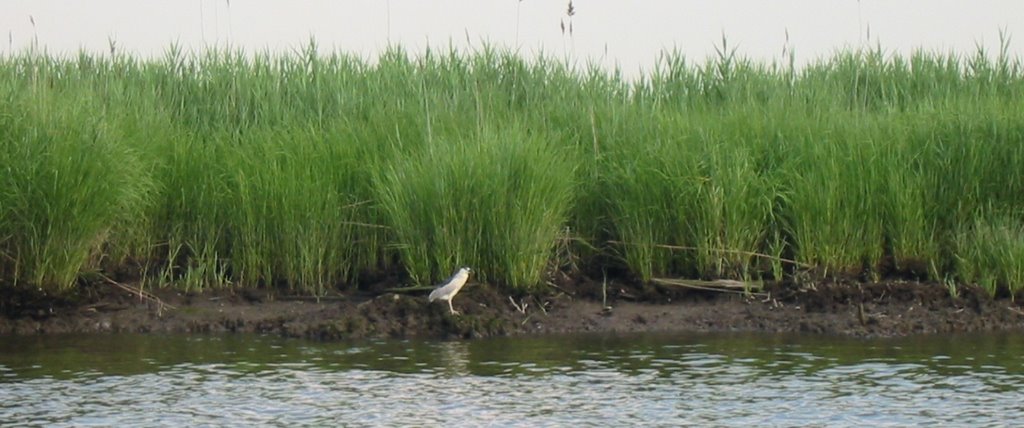
Friday, June 30, 2006

Coastal Marine Resource Center To Host Benefit at East River Park With International Recording Artist Moby

FOR IMMEDIATE RELEASE:

COASTAL MARINE RESOURCE CENTER TO HOST BENEFIT AT EAST RIVER PARK WITH INTERNATIONAL RECORDING ARTIST MOBY

New York, NY, June 30, 2006 – The Coastal Marine Resource Center (CMRC) will hold its Annual Fundraiser at the East River Park Amphitheater on July 13th, 2006 from 6:30 to 9:30 PM to raise awareness for coastal conservation and public waterfront access. The evening will feature a performance by CMRC Benefit Host, V2 Records recording artist Moby and will honor Stewards of the Estuary Lillian Borrone and Vice Admiral Paul Gaffney for their work on the U.S. Commission on Ocean Policy.

East River Park is a truly phenomenal waterfront resource hidden on the far eastern shore of lower Manhattan. The park is one of the biggest in New York and contains miles of waterfront public access and multiple athletic and cultural facilities. However, many amenities including the waterfront walkway and amphitheater have fallen into disrepair. Recent efforts by community groups have started the process of rebuilding, but significant resources are needed to make the Park fully functional and accessible.

The CMRC is proud to partner with sponsors Patagonia, Nautica, Outside Magazine, 3R Living and NYC Department of Parks and Recreation. The evening is being produced by Penta Dynamic Solutions and guests will enjoy hor d'oeuvres, cocktails by Leblon Rum and waterfront dancing as Moby performs with vocalist Laura Dawn and guitarist Daron Murphy. For more information please visit www.thecmrc.org.

About Moby: Moby started his musical career in 1982, playing hardcore punk with the Vatican Commandos. Since then he's DJ'ed, written classical music for movies, made dance and rock records, performed at the Winter Olympics and sold 15 million records. He recently wrote music for Richard Kelly's movie “Southland Tales” and will release a greatest hits album this fall. Learn more at www.moby.com.

About The Coastal Marine Resource Center: The Coastal Marine Resource Center is a 501.c.3 non-profit organization dedicated to the conservation of the New York – New Jersey Harbor Bight. For additional information and to purchase tickets for the CMRC Benefit, please visit http://www.thecmrc.org/.

###

Contact: Joel Banslaben, MPA
Executive Director, Coastal Marine Resource Center of New York
646-515-9290 or info@thecmrc.org

Wednesday, June 28, 2006

Business Stewardship Speaker Series Kick-Off: Tuesday, July 25!!!

BUSINESS STEWARDSHIP SPEAKER SERIES KICK-OFF
TUESDAY, JULY 25 – SAVE THE DATE!

The Coastal Marine Resource Center of New York is pleased to announce that we will be kicking-off our Business Stewardship Speaker Series on Tuesday, July 25 from 8:30 – 10:00 AM at the Hudson River Foundation. Building on the success of the Business Stewardship Workshop earlier this year, the Speaker Series will showcase the experiences of local businesses and conservation organizations working together to implement restoration projects. The topic of the first meeting will be: Business Stewardship in the Harbor Estuary: Corporations Leveraging Resources for Coastal Conservation. Look forward to seeing you there!

What: Business Stewardship Speaker Series
Where: Hudson River Foundation, lower Manhattan (www.hudsonriver.org)
Date: Tuesday, July 25
Time: 8:30 – 10:00 AM

In addition, we have created a summary of our efforts to date on the Business Stewardship Initiative below. The Business Stewardship Workgroup, composed of members of the business and conservation communities, recently conducted it first meeting in May and is in the process of creating a “volunteer network” that will bring together the business and conservation groups for on-the-ground-restoration projects. Please email business.stewardship@thecmrc.org to find out more.

CMRC Business Stewardship Workshop Summary (PowerPoint)
http://thecmrc.org/docs/BusinessStewardshipWorkshopSummary.ppt

CMRC Business Stewardship Workshop Report
http://thecmrc.org/docs/BusinessStewardshipWorkshopReport.doc

Finally, a special section in the NY Times on “The Business of Green” that provides great insight into the latest trends in business stewardship.
http://www.nytimes.com/business/businessspecial2/index.html

In the News: "Seaweed revolution" needed to stir action to protect the oceans

Both the US Commission on Ocean Policy and Pew Oceans Commission arrived at the same conclusion - our oceans and coasts are in danger and need increased resources to support their protection and restoration. For some members of the commissions, the work does not stop there. In our region, Lillian Borrone (retired PANYNJ) and Vice Admiral Paul Gaffney (President Monmouth University) have continued to speak to the need for increased measures to assure that future generations are able to enjoy our great marine resources. In the op-ed below from the Asbury Park Press they focus on the need for a "seaweed revolution" to continue to build on the momentum of their conservation work. JB

Asbury Park Press
May 3, 2006

By: Lillian Borrone and Paul Gaffney II

The health of the earth is inextricably linked to the health of ocean ecosystems. As a recent speaker at Monmouth University observed, it is past time to start a "seaweed revolution" to raise awareness and spur action to protect the oceans.

Beneath the shimmering surface, our oceans are facing a crisis. As members of the U.S. Commission on Ocean Policy, we had the privilege of traveling across the nation and heard story after story about the threats facing coastal communities and our ocean environment. Ocean currents show signs of shifting patterns; large fish species such as shark, marlin and tuna have declined more than 90 percent; harmful algal blooms and fish kills pock-mark our coasts and the frequency and intensity of hurricanes is predicted to increase, threatening lives and property along the coast.

The commission's final report, An Ocean Blueprint for the 21st Century, available at www.oceancommission.gov, sent out a call for action and set up a framework for change with more than 200 specific recommendations.

The message: We can and must do something now to avert the collapse of our oceans.

We have a rare opportunity to save one of our most precious natural resources - the oceans and coasts. Commission members have joined with representatives from the Pew Ocean Commission to form the Joint Ocean Commission Initiative to continue to apply pressure in Washington and around the nation on government leaders to act on ocean reform. The initiative has issued a U.S. Ocean Policy Report Card, which evaluates our national progress. The results were discouraging to say the least.

An overall mark of D-plus would put the student on probation at most schools. The report card recognizes that many governors, state agencies and universities have taken some action. In our own back yard, the state Department of Environmental Protection developed the COAST 2005 initiative, a plan to protect the integrity and economic viability of New Jersey's valuable coastal resources. New York Gov. George Pataki, a member of the Pew Oceans Commission, convened an ocean summit and has recommended increased funding for coastal, oceans and Great Lakes initiatives. At Monmouth University, we have started the Urban Coast Institute. Its mission is to bring the best science and information available to support stewardship of coastal ecosystems and communities.

This is a good start. However, much more can be done in this region and across the country.

Some key actions that should be taken at the state and federal levels include:

A doubling of ocean research funding and increased support for ocean research, science and education at the state and community level. How can one make good ocean policy without understanding the processes of the coastal ecosystem?

Place more focus on ocean issues in our school science curricula. We need an ocean-literate public that understands how the earth and ocean are connected.

Develop guidelines and standards for managing offshore waters to address
emerging demands for offshore energy development and wind farms, aquaculture and conservation of fisheries and other living marine resources.

Congress should reauthorize the Magnuson-Stevens Fisheries Conservation and Coastal Zone Management acts and approve the Law of the Sea Treaty.

Provide a sustainable source of funding for key ocean programs by implementing a key Commission on Ocean Policy recommendation to establish an Ocean Policy Trust Fund.

We have an historic opportunity to save our oceans if we act now. There is strong leadership in our region that can be a model to unify our nation around a common goal - protecting and restoring ocean and coastal ecosystems to provide the goods, recreation and services that people can cherish for generations to come.

Lillian Borrone is the former assistant executive director of the Port Authority of New York and New Jersey. Paul Gaffney II is president of Monmouth University, West Long Branch.

Asbury Park Press:
http://www.app.com/apps/pbcs.dll/frontpage

Monday, June 26, 2006

CMRC Benefit Postponed Until Thursday July 13th

Due to the inclement weather that is expected this week the CMRC Benefit is postponed until Thursday, July 13th.

We are looking forward to a great evening with Moby and our Stewards of the Estuary and hope you will be able to join us!

More details to follow soon. Thanks for your continued support!!!
JB

Friday, June 23, 2006

In the News: What Goes Down Drain Eventually Bobs Up Here

When it rains in our metropolis everything goes down the drain. Literally. Miles upon miles of paved, or impervious, surfaces channel rainwater into street drains where the liquid is mixed with everything that goes down our sinks, toilets and bathtubs. Under normal conditions, this mix of fluids and solids flows towards our wastewater treatment plants which clean the water and return it to our local waterways. However, when it rains the system is overwhelmed and the materials are released, untreated, into our waterways creating dangerous environmental conditions. In the first stage of wastewater treatment waters are "screened" for solids and other materials such as plastic bottles and (sometimes) live animals writes the NY Times in the article below. JB

By Corey Kilgannon

The best places to see the celebrated products of New York - its Broadway talent, its skyscraper architecture - are well known.

But the best place to see Manhattan's byproducts - what is stuffed down its sinks, flushed down its toilets and washed from its gutters - cannot be found in tour guides. There is perhaps no better vantage point than the Manhattan Grit Chamber, which strains solids from much of the borough's sewage as it flows underground to the Wards Island Wastewater Treatment Plant.

"This is where it all winds up," said John Ahern, who oversees the chamber, a large building at the eastern end of 110th Street in Manhattan, next to
Franklin D. Roosevelt Drive.

The Manhattan chamber handles sewage from much of the Upper East Side and Upper Manhattan, which makes up about a third of the city's total. From the baby's bathwater to the dead rat washed down a curbside storm drain, from a slop sink at Gracie Mansion to a Washington Heights bodega bathroom, it all goes into the street sewers, which, in their intricate latticework, are laid out so that the sewage flows by gravity to one large main bound for a tunnel running under the East River to the plant on Wards Island, surrounded by Manhattan, Queens and the Bronx. There it is cleaned of toxins and released as purified water into the river.

To keep the tunnel clear, grit and other solid materials must be strained before the sewage enters. That's where the chamber comes in. It was opened in 1937 along with the Wards Island plant and the city's other grit chamber in the Bronx and strains sewage from the west Bronx. It also feeds the Wards Island plant.

At the Manhattan chamber, sewage enters through a 12-foot-wide main and flows into a basement room, where it is split into four canals, slowing its flow so that solids settle to the bottom. The sediment is collected by an arm that sweeps the bottom of the canal and empties into buckets that automatically rinse the grit and lift it up to the ground floor, where it is deposited in metal bins.

The detritus floating in the channels - yesterday, this included cigarette butts, bottle caps, plastic bottles, candy wrappers and plastic spoons - is skimmed out by a rake and pulled up an incline called a screen climber, which resembles an escalator, and is also deposited into bins.

They sit at the foot of the elegant columns gracing the building's Art Deco lobby, one of the aging Art Deco features in the building that are being restored. The refined architecture is at odds with the omnipresent stench.


The strained waste water proceeds along the canals and through sluice gates, then drops several hundred feet down a shaft into a nine-foot-wide tunnel running as much as 500 feet below the East River to the plant.

The bins of accumulated solids, called "screenings," are frequently dumped by forklift into larger ones for transport to Wards Island and are held there until they are shipped to landfills out of state. The whole process is costly, and might be less so if people paid more attention to what they flush down the drain, city officials say.

Read more:
http://www.nytimes.com/2006/06/23/nyregion/23garbage.html

Monday, June 19, 2006

In the News: Developing a "Sea Sense" in Long Island

With recent events like World Oceans Day earlier this month and International Surfing Day on June 21 it appears that people the world over are moving towards creating an awareness of marine ecosystems and the need for conservation. Recent conclusions by both the Pew Oceans Commission and US Commission on Ocean Policy found that our coastal and oceanic resources are still at serious risk from overdevelopment and pollution. In addition, the recommendations of both commissions pointed toward the need for conservation, restoration and public access facilitated by increased coordination between scientists, policy-makers, businesses and the general public. While the conclusions are relatively easy, going forward with implementing the recommendations is an enormous challenge for the conservation community. However, for Long Island, many of the issues can be solved by increased collaboration and awareness writes Newsday in a great five part series. JB

Newsday Five Part Series:
Deep troubles: It's high time that we, as island-dwellers, started paying attention to the failing health of the waters around us.
http://www.newsday.com/news/printedition/stories/ny-vpuno044767304jun04,0,211730.story

Our lifestyle kills oceans. Long Island’s water hazards are as ubiquitous as parking lots and fertilizer.
http://www.newsday.com/news/opinion/ny-vpoce054769497jun05,0,5218697.story

Habitat Harmony: Science and industry need to work together to conserve fish.
http://www.newsday.com/news/opinion/ny-vpoce064770657jun06,0,696705.story

Sea Sense: They're all connected. Building back fish stocks takes an ecosystem-wide approach.
http://www.newsday.com/news/opinion/ny-vpoce074771725jun07,0,565632.story

Sea Sense: High-stakes fishing lawNew bill should diversify councils, respect science and set smart standards.
http://www.newsday.com/news/opinion/ny-vpoce084772981jun08,0,4301191.story


June 4, 2006
First in a series


This narrow finger of land, our island home, points steadily to the vast ocean that has beaten on its shores for so many millennia. The might of the sea is right there in our faces, but we don't pay a lot of attention.

Yes, we sit on the sand of some of the most beautiful beaches in the world and watch the waves roll in. Some of us venture out in small vessels of our own or in large party boats, to test our skills with hook and line against the survival instincts of the fish. We eat what commercial fishermen bring back to Montauk, the state's busiest fishing port - a catch dominated by such species as the Loligo squid, which becomes fried calamari, and the tilefish, which burrows into the ocean floor, consumes crustaceans, and tastes a lot like lobster.

But most of us don't spend much time thinking about the ocean, Long Island Sound, the Great South Bay, or the estuaries where fresh water meets salt in a network of bays, tributaries and tidal marshes that support a rich variety of aquatic life.

As we steer our cars through the crowded asphalt labyrinth of Long Island's roads, it doesn't often occur to us to worry about the rains that carry the gunk from those roads to the ocean, or about the fish who can't get upstream to complete their life cycle because they're unable to get past a dam that's now part of our transportation system.

Now is as good a time as any - and better than most - for all of us to start paying attention to the waters around us. Here are some reasons why:

Washington is changing the key rules.

For the first time in a decade, Congress is working on a significant update of the Magnuson-Stevens Act, the law that lays out the rules for managing our fisheries. It balances the short-term economic need for fishing today against controls needed to ensure the health of fish stocks and the future of fishing tomorrow. Court decisions have said the act puts conservation first.

House and Senate reauthorization bills differ sharply in some ways, but agree in others. The debate over them should be viewed in the context of our on-again, off-again effort to make sound ocean policy.

Before 1970, our nation's share of world fish catch had declined sharply, from second to sixth. American fishermen were angry about the vast amounts of fish that foreign factory trawlers were harvesting near our shores. So Congress reacted with corrective legislation in 1976 that came to be known simply as the Magnuson-Stevens Act.

That law expanded national jurisdiction over the ocean from 12 nautical miles off the shore to 200 miles, giving us an "exclusive economic zone" of 4.5 million square miles - larger than the lower 48 states. It set up eight regional fishery management councils to guard against overfishing. But the investment in American fleets that it encouraged also contributed to a situation of too many fishermen chasing too few fish.

The key Senate sponsor for the reauthorization bill is Sen. Ted Stevens (R-Alaska). His name is on the original act, which was improved by the 1996 Sustainable Fisheries Act. On another issue, his push to drill for oil in Alaska's Arctic National Wildlife Refuge, this page has compared him to the tough-to-kill Harry Potter villain, Lord Voldemort. Even if he is the Dark Lord of Drilling, he does know the subject of fishing, and his reauthorization bill makes more sense than the House version - though both have good features.

Commissions have sounded an alarm.

Two separate bodies, the independent Pew Oceans Commission and the congressionally appointed U.S. Commission on Ocean Policy, have studied the issues and reached remarkably similar conclusions. They say our oceans are suffering from coastal development, from pollution that storm-water runoff and other sources create, and from overfishing in some fisheries.

The broad principles that they have laid out make excellent sense, especially the dry-sounding but vital goal of ecosystem-based management: We can't keep our oceans healthy and our fisheries sustainable by managing them one species at a time. We have to look not only at the species we're trying to conserve, but at the complex interaction among that species, those it eats and those that prey on it, and the habitat that nourishes it.

To keep those reports from sitting untouched on the shelf, the chairmen of the two commissions have formed a Joint Ocean Commission Initiative and begun giving regular grades to government. And last month, the chairmen, Leon Panetta of the Pew Oceans Commission and Admiral James Watkins of the U.S. Commission on Ocean Policy, wasted no time in issuing a sharp analysis of the House bill after it emerged from a markup session.

Read more:
www.newsday.com

Deep troubles: It's high time that we, as island-dwellers, started paying attention to the failing health of the waters around us
http://www.newsday.com/news/printedition/stories/ny-vpuno044767304jun04,0,211730.story

Our lifestyle kills oceans. Long Island’s water hazards are as ubiquitous as parking lots and fertilizer
http://www.newsday.com/news/opinion/ny-vpoce054769497jun05,0,5218697.story

Habitat Harmony: Science and industry need to work together to conserve fish
http://www.newsday.com/news/opinion/ny-vpoce064770657jun06,0,696705.story

Sea Sense: They're all connected. Building back fish stocks takes an ecosystem-wide approach
http://www.newsday.com/news/opinion/ny-vpoce074771725jun07,0,565632.story

Sea Sense: High-stakes fishing lawNew bill should diversify councils, respect science and set smart standards
http://www.newsday.com/news/opinion/ny-vpoce084772981jun08,0,4301191.story

Monday, June 12, 2006

CMRC to Host Benefit at East River Park with International Recording Artist Moby!!!

FOR IMMEDIATE RELEASE:

COASTAL MARINE RESOURCE CENTER TO HOST BENEFIT AT EAST RIVER PARK WITH INTERNATIONAL RECORDING ARTIST MOBY

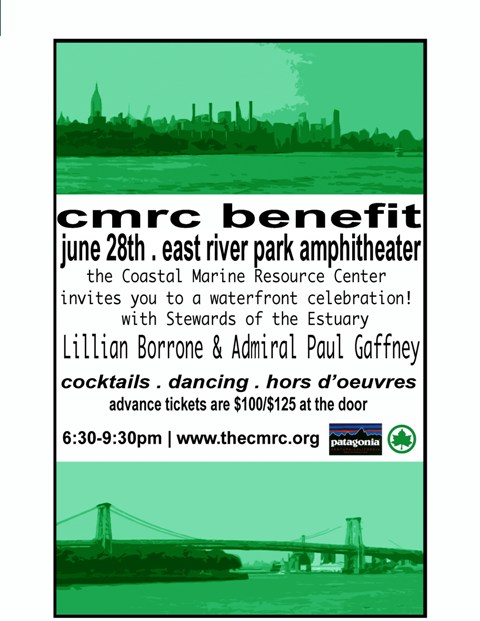
New York, NY, June 12, 2006 – The Coastal Marine Resource Center (CMRC) will hold its Annual Fundraiser at the East River Park Amphitheater on June 28th, 2006 from 6:30 to 9:30 PM to raise awareness for coastal conservation and public waterfront access. The evening will feature a performance by CMRC Benefit Host, V2 Records recording artist Moby and will honor Stewards of the Estuary Lillian Borrone and Admiral Paul Gaffney for their work on the U.S. Commission on Ocean Policy.

East River Park is a truly phenomenal waterfront resource hidden on the far eastern shore of lower Manhattan. The park is one of the biggest in New York and contains miles of waterfront public access and multiple athletic and cultural facilities. However, many amenities including the waterfront walkway and amphitheater have fallen into disrepair. Recent efforts by community groups have started the process of rebuilding, but significant resources are needed to make the Park fully functional and accessible.

The CMRC is proud to partner with sponsors Patagonia, Nautica, Outside Magazine and New York City Department of Parks and Recreation. The evening is being produced by Penta Dynamic Solutions and guests will enjoy hor d'oeuvres, cocktails by Leblon Rum and waterfront dancing as Moby performs with vocalist Laura Dawn and guitarist Daron Murphy. For more information please visit www.thecmrc.org.

About Moby: Moby started his musical career in 1982, playing hardcore punk with the Vatican Commandos. Since then he's DJ'ed, written classical music for movies, made dance and rock records, performed at the Winter Olympics and sold 15 million records. He recently wrote music for Richard Kelly's movie “Southland Tales” and will release a greatest hits album this fall. Learn more at www.moby.com.

About The Coastal Marine Resource Center: The Coastal Marine Resource Center is a 501.c.3 non-profit organization dedicated to the conservation of the New York – New Jersey Harbor Bight. For additional information and to purchase tickets for the CMRC Benefit, please visit www.thecmrc.org.

###

Contact: Joel Banslaben, MPA
Executive Director, Coastal Marine Resource Center of New York 646-515-9290 or info@thecmrc.org

Wednesday, June 07, 2006

CMRC Benefit at East River Park June 28th!!!

The CMRC will be holding its Annual Fundraiser at East River Park on June 28th from 6:30 to 9:30 PM. We will be honoring as "Stewards of the Estuary" Lillian Borrone and Vice-Admiral Paul Gaffney for their work on the US Commission on Ocean Policy. The evening will include a performance by international recording artist and CMRC Benefit Host Moby. It should be a great evening! JB

For more information on the events and to purchase tickets please see our website at www.thecmrc.org

Tuesday, June 06, 2006

Exploring Our Coasts & Waterfronts: East River Park, Manhattan

The CMRC is committed to increasing public access to our urban waterfronts found throughout the New York - New Jersey Harbor Estuary. As part of this effort, the CMRC's Conservation & Access Network periodically explores our coasts and waterfronts in search of areas that either currently provide access or are in need of resources to increase public access to the coastline. Today, we explore a great waterfront asset - East River Park in lower Manhattan - and efforts to revitalize its currently under-utilized coastal resources. The CMRC will be holding its Annual Benefit at East River Park on June 28th! JB

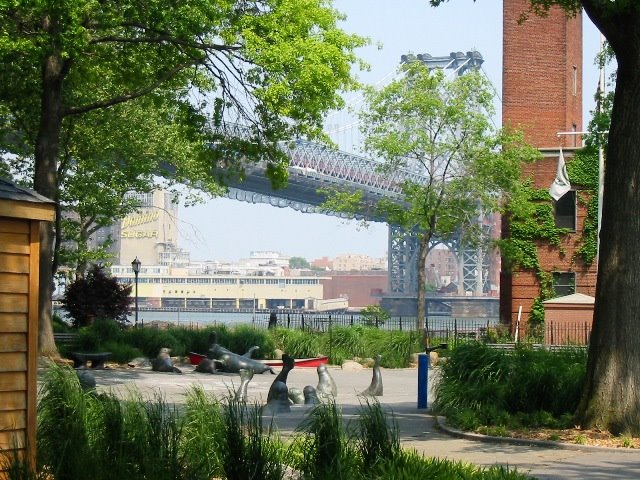
East River Park is a truly phenomenal waterfront resource hidden on the far eastern shore of lower Manhattan. This great park is one of the biggest in all of New York City and contains miles of waterfront public access and multiple facilities for athletic and cultural activities. However, the Park has also faced periods of neglect and as a result many of the amenities, including the waterfront walkway and amphitheater, have fallen into disrepair. More recent efforts by non-profits and community groups have again started the process of rebuilding the park and increasing access, but a lot of work still needs to be undertaken to make this Park fully functional and accessible.

East River Park was created by the "Power Broker" Robert Moses in the early 1930s as a result of the construction of FDR Drive. While Moses was great at building highways he was also adept at creating parkland and during the process he actually added many acres of waterfront property by building an extension of the current shoreline. Today the park is one of the largest in New York City at 57,457 acres. From the Eat River Park Website:

The East River Park runs alongside the Franklin Delano Roosevelt (FDR) Drive and the East River from Montgomery Street to East 12th Street. It was conceived in the early 1930s when Robert Moses (1888-1981) was designing the FDR (also known as East River) Drive. Moses knew that the expressway would pass through the Lower East Side, a neighborhood sorely in need of parkland. He was determined not to let the land between the expressway and the river go to waste. Moses envisioned a tree-shaded esplanade with abundant recreational facilities and windswept views of the East River and beyond.

The East River waterfront has played a crucial role in the development of New York City. Before the arrival of Dutch colonists in the 17th century, it was home to the Nechtanc, a subgroup of the Lenapes, Native Americans who once inhabited much of the New York area. After European settlers colonized the area, it formed a vital link in trade with Europe and the West Indies. By 1825, the area was marked by an active shipbuilding industry, boisterous masses of sailors, and a number of active municipal waterfront markets. In the mid-19th century, as sea trade moved to the deeper channels of the Hudson River, docks gave way to factories, and then, in the late 19th century, to tenements. By the time Moses developed his plan for the park, the southern East River waterfront was dotted with slaughterhouses, glass factories, power stations, and railroad yards.

Located in downtown Manhattan the park is really a hidden gem located adjacent to millions of urban residents who are unaware of what lies just across the FDR Drive. Limited access is provided by footbridges that cross the highway at distant intervals. In addition, the residents of the multiple housing projects in the nearby Lower East Side have had difficultly accessing the park and its resources and many physical and socio-economic barries exist for the nearby local communities.

The Park is managed by the New York City Department of Parks and Recreation. The Park is home to miles of waterfront esplanades and many, many athletic facilities including tennis courts, basketball courts, a track, soccer fields, baseball fields and more. In addition, East River Park is home to the Lower East Side Ecology Center which provides environmental education and outreach from the Fireboat House just south of the Williamsburg Bridge. On the far south end of the Park exists a great cultural resource in the East River Park Amphitheater. This amazing facility has a capacity of over 2,500 attendees and provides great waterfront views of the River and Brooklyn. Below is a little history on the Amphitheater from the Parks website:

An amphitheater was built in the park in 1941, along with an adjacent limestone recreational building, as part of an urban renewal project for the Lower East Side. Joseph Papp (1921-1991), founder of Shakespeare in the Park and the Public Theater, staged Julius Caesar there in 1956. During much of that decade, the amphitheater was the site of free Evening-in-the-Park concerts. Local schools held their graduation ceremonies there, and the Group of Ancient Drama performed free productions of Greek classics. In 1973, however, the amphitheater closed due to a budget shortage. Vandals attacked the neglected theater and by 1980 it was unusable.

The size of the Park is so large that simple maintenance activities require a large amount of resources. Unfortunately, unlike places like Central and Bryant Parks, no conservancy exists solely to assist with the parks efforts and consequently resource needs often are not met. Several non-profit organizations have worked tirelessly to advocate for the Park and the need for more resources to maintain the facilities and operate athletic, environmental and cultural programs. Currently, a largescale redevelopment project is underway to revitalize the Parks Esplanade and several of the athletic facilities have been renovate in recent years. Plans are in place to create a waterfront bike and walkway very similar to the current resources on the west side of Manhattan. From the NYC Parks website:

In recent years, the park has been the site of extensive renovations, including 1994 improvements to the basketball court, playground, and picnic area, and seawall. Renovation continued in 1996, when Parks celebrated the opening of the 10th Street comfort station, funded through the efforts of City Council Members Antonio Pagan and Kathryn Freed, with a First Flush ceremony. Commissioner Stern performed a ceremonial flush of the men's room toilet and cut an inaugural toilet paper ribbon. In 2000, ballfield lighting improvements were completed with funding provided by City Council Member Margarita Lopez. A bikeway was completed in 2001 with funding from Mayor Giuliani and Borough President C. Virginia Fields.

East River Park is an amazing waterfront resource that has in recent decades somehowremainedd "hidden" from the millions of residents in the region. The Park serves a large low-income community but due to limited access the Park has been underutilized by those who truly deserve to have complete access to the Park and its waterfront resources. Several largescale capital projects are underway and many local groups are working to increase resources for the Park, however it still remains in need of assistance to really live-up to the unbelievable potential it has. Hopefully, with assistance from the CMRC and the many other organizations and agencies that are involved, East River Park will one day parallell Central Park as one of the great parks in the Harbor Estuary.

Read more:

East River Park Homepage
http://www.nycgovparks.org/sub_your_park/historical_signs/hs_historical_sign.php?id=12173

Google Map of East River Park
http://maps.google.com/maps?f=q&hl=en&q=nyc&ll=40.714932,-73.975925&spn=0.014378,0.042915&t=h&om=1

Wikipedia on East River PArk
http://en.wikipedia.org/wiki/East_River_Park

NYC Department of Parks and Recreation
http://www.nycgovparks.org/

East River Park Redevelopment Site
http://www.nycgovparks.org/sub_your_park/lmr/html/east_river_park.html

Friday, June 02, 2006

Conserving our Coasts & Waterfronts: NYC Audubon's Harbor Herons Program

The CMRC's periodically explores the agencies, organizations and individuals who act as "Stewards of the Estuary" to better understand the latest programs and projects affecting our coastlines and waterfronts. One such organization, Audubon NYC, is active in the conservation and monitoring of avian species that exist in our Harbor Estuary region. The article below describes their Harbor Herons Program which works to protect and restore the great wading-bird populations of our region. JB
Millions of birds inhabit our urban estuary and surrounding coastlines, using these areas for nesting, foraging and migratory routes. Recently, scientists have observed a significant increase in the amount of birds found on the most developed portions of our landscape. One organization, New York City Audubon, works to protect, monitor and raise awareness of all birds species found in the region's ecosystem.

One of the more important grouping of species from a coastal marine perspective, is that of the Harbor Herons, a group of wading birds that can be found in, on and around the waters of the New York - New Jersey Harbor Estuary. NYC Audubon has develop a program known as the Harbor Heron Project, that works exclusively to monitor and protect these species.

Harbor Herons include a wide range of birds that live near the water. This includes some very charismatic species like the Great Egret, Snowy Egret, Great Blue Heron and Black-Crowned Night Heron. These birds can often be seen along the waterways of the Harbor Estuary in the extensive mudflats, tidal marshes and shallow pools looking for prey in the water or hiding out in the reeds and nearby trees waiting for dusk, and feeding time, to arrive.

Many of these species have at some point been on the endangered species lists at both the State and Federal levels but now due to the great conservation work of groups like NYC Audubon their populations are now rebounding. Below is a brief description of the changing population numbers from the Harbor Herons site:

New York City, the Audubon, and egrets have a common history going back more than a hundred years. At the end of the Nineteenth Century, a New York City resident, George Bird Grinnell, started the first Audubon. He brought together like-minded people who hoped to stop the slaughter of egrets, which were being killed by the hundreds of thousands so that their plumes could be shipped to New York and used to decorate hats.

The millinery trade brought egrets, and several other bird species, to the brink of extinction. Grinnell's Audubon and the organizations that followed it brought protection to the egrets and scores of other beleaguered species with the enactment of the Migratory Bird Treaty Act of 1914. With new protection, egret and heron populations recovered and spread beyond their historical southern ranges. By 1960, egrets were nesting as far north as New Hampshire. There were, however, no egret colonies in New York City.

Imagine the delight of New York birders when Scotty Jenkins found egrets nesting on Pralls Island in the Arthur Kill on the western border of Staten Island! The Clean Water Act of 1972 had allowed water quality to improve enough to support prey species for the egrets.
Following Jenkin's discovery, New York City Audubon began efforts to protect the nesting site, and started an annual census of breeding herons, egrets and ibises in the city. Eighteen years later, the censuses continue and the birds are prospering.

Today the Harbor Herons Project runs many great programs of interest that support the continued conservation of these bird species. One fo their most successful efforts is an extensive volunteer monitoring network that collects data on the numbers and whereabouts of birds in the region. In addition, the Harbor Herons Project runs several outreach and education programs, most notably their Sunset Journey Eco-Island Tours that visits North and South Brother Islands and also passes by a newly found colony at Mill Rock. These tours are provided with assistance from the NY Water Taxi every Saturday throughout the summer and provide great views of the birds and the harbor and leave from South Street Seaport.

Although the Harbor Herons are coming back in droves there are certainly several threats, like development and chemical releases, that will continue to pose a threat to the different species. With the continued hard work of conservation organization like NYC Audubon and many others, we hope to see a rebound in the many birds population that inhabit the coastal waters of the New York - New Jersey Harbor Bight. The amazing success of these efforts will only continue to solidify the region as a truly urban estuary.

More info:

NYC Audubon Harbor Herons Project
http://www.nycaudubon.org/projects/harborherons/

Harbor Heron Tour Schedule
http://www.nycaudubon.org/home/SBTrip.shtml

NY Water Taxi
http://www.nywatertaxi.com/Default.aspx

Tuesday, May 30, 2006

In the News: In the Works, Another Park for a Bit of the Waterfront

A defunct segment of the industrial Sunset Park waterfront in Brooklyn will now be turned into a park and recreation facility with fishing and an environmental education center according to the City of New York. The plan will convert an area from 43rd to 51st Streets, also known as the "Bush Terminal," from contaminated brownfields into productive coastal access with the assistance of large grants from New York State and the City via the Economic Development Corporation. Creating the Park will add a great asset to the community of Sunset Park and continue the trend of increased access and parks on the waterfront states the NY Times. JB

May 30, 2006
By Joseph P. Fried

In its latest effort to reclaim waterfront land for recreation, New York City plans to turn a half-mile stretch of contaminated landfill and crumbled piers in the Sunset Park section of Brooklyn into a park with panoramic views of the harbor and the Manhattan skyline.

The landfill was created in the 1970's, when the city planned to convert the site, which it owns, into a cargo terminal. The city halted the landfill work in 1978, though, when it learned that the private contractor had allowed questionable material to be used.

Investigators later found that elevated levels of arsenic, lead and other hazardous material were in the oil sludge, industrial waste water and other substances put in the landfill.

There has been no activity since the landfill work was stopped, and the entire half-mile stretch has been fenced off since at least the early 1980's.

The $36 million plan to correct the environmental hazards and remove the collapsing piers — and to create ball fields, picnic and fishing areas and possibly an environmental education center — was welcomed by Sunset Park residents interviewed last week.

"It's only going to help the neighborhood," Alex Plasencia, who has lived in Sunset Park for 59 of his 63 years, said near his home on Fourth Avenue and 44th Street, four blocks away. The site runs from 43rd to 51st Streets, between the waterfront and a large complex of buildings and warehouses known as Bush Terminal.

Mr. Plasencia, a retired truck driver, recalled his boyhood in the neighborhood in the 1950's. "I used to swim off the pier on 53rd Street," he said.

Candida Villanueva, 56, standing in front of her home of two decades on 43rd Street between Second and Third Avenues, said, "It will be better for it to be a park instead of all that mess."
Once completed, the park could cost her some of the quiet atmosphere she has now. The plan calls for 43rd Street to be one of two access streets to the park. "Nobody comes down here now," she said.


That is because the side streets between the water and Third Avenue have more industrial and commercial tenants than residents. There is much less pedestrian traffic on those side streets than on the streets east of Third Avenue, where most of Sunset Park's working-class population lives. The elevated Gowanus Expressway travels above Third Avenue.

Jeremy Laufer, district manager of Community Board 7, which includes Sunset Park, said the public's only access to the two miles of waterfront in Sunset Park now is a pier at 58th Street, which serves as a terminal for a ferry to Lower Manhattan.

The plan for more waterfront access here follows projects in recent years that have created a ribbon of new parkland along the Hudson River in Manhattan, and plans for parks in other largely inaccessible shoreline areas of Brooklyn, near the Brooklyn Bridge and in Williamsburg and Greenpoint.

Read more:
http://www.nytimes.com/2006/05/30/nyregion/30sunset.html

New York State DEC Information on Site:
http://www.dec.state.ny.us/website/der/projects/bush/

In the News: The W2O Marks International Day of the Ocean With A New Sustainability Perspective

International Day of the Ocean falls on Thursday, June 8 of this year and comes at a very important time in our coastal and ocean conservation efforts. With nearly half of our world's 6 billion living near the coast and the numbers only continuing to rise it is critical that we take action at the local level to protect our marine resources and create an example for developing communities around the world. The World Ocean Observatory is one example of an organization that is building on local conservation efforts at a global scale writes ENN in the article below. JB

May 22, 2006

According to the United Nations, approximately three billion people - half of the world's population - live within 125 miles of a coastline. With these numbers on the rise, it is increasingly imperative to understand the connection between humanity and the waters that cover 71 percent of the earth's surface. June 8 has been declared the International Day of the Ocean, providing a time for the media to deliberate on the state of ocean affairs, and one organization - the World Ocean Observatory - is providing a new perspective on how to approach ocean sustainability in a changing world.

"The world's oceans are an integrated global social system," states World Ocean Observatory founder and director Peter Neill. "In order to develop a sustainable relationship with the world's oceans, we need to recognize that humans around the globe are not separate from the international waters that link them. The sea connects us all."

The World Ocean Observatory, dedicated to public education on all levels about the world's oceans, reaches beyond the conventional and isolated approach of marine species and habitats to address the ocean in relation to humanity: how the health of the oceans and the laws of the sea affect climate, fresh water, energy, food production, public health, trade, transportation, international finance, recreation, culture, and governance.

"In half a century, humans have transformed the ecosystems they are dependent upon for survival," said Neill. "Declaring an International Day of the Ocean is an important first step, but understanding the ocean's impact on human survival must become a daily concern. Katrina, the tsunami, and climate change are all indicators that we need to change our perspective and relate to the ocean in a new way."

The World Observatory is a direct response to a recommendation by the 1998 Independent Commission on the Future of the Oceans for a global clearinghouse of ocean information. The World Ocean Observatory website - www.thew2o.net - serves as an online point of exchange for ocean information and educational services, comprising four elements: The Physical Ocean, an encyclopedic survey incorporating the United Nations Atlas of the Oceans and other repositories of ocean information; The World Ocean Directory, a theme-indexed listing of over 10,000 ocean-related organizations worldwide; The World Ocean Forum, a news and media service, monthly electronic newsletter on ocean subjects, publications, meetings, and on-line exhibits; and The World Ocean Classroom, an education center and outreach program. The Cultural Ocean, a demonstration of the incontrovertible impact of maritime enterprise and history on world culture, will be added shortly.

Read more:
http://enn.com/net.html?id=1511

Thursday, May 25, 2006

In the News: NOAA Predicts Very Active 2006 North Atlantic Hurricane Season

The National Oceanic and Atmospheric Administration (NOAA) released its predictions for the upcoming hurricane season that begins on June 1 with expectations that the north Atlantic region will be "very active" in terms of tropical storm events. This news comes on the heels of the record breaking 2005 tropical season that saw 28 storms and many powerful hurricanes that decimated the Gulf Coast. NOAA continues to focus on preparedness as the best way to limit the impacts of these storms and the real threat exists that the mid-Atlantic and northeast may see a significant storm this year. JB

May 22, 2006

NOAA today announced to America and its neighbors throughout the north Atlantic region that a very active hurricane season is looming, and encouraged individuals to make preparations to better protect their lives and livelihoods. May 21-27 is National Hurricane Preparedness Week.

During a news conference at the NOAA National Hurricane Center, Deputy Secretary of Commerce David A. Sampson noted, "Preparation is the key message that President Bush wants to convey during National Hurricane Preparedness Week. The impact from these storms extends well beyond coastal areas so it is vital that residents in hurricane prone areas get ready in advance of the hurricane season."

"For the 2006 north Atlantic hurricane season, NOAA is predicting 13 to 16 named storms, with eight to 10 becoming hurricanes, of which four to six could become 'major' hurricanes of Category 3 strength or higher," added retired Navy Vice Adm. Conrad C. Lautenbacher, Ph.D., undersecretary of commerce for oceans and atmosphere and NOAA administrator.

On average, the north Atlantic hurricane season produces 11 named storms, with six becoming hurricanes, including two major hurricanes. In 2005, the Atlantic hurricane season contained a record 28 storms, including 15 hurricanes. Seven of these hurricanes were considered "major," of which a record four hit the United States. "Although NOAA is not forecasting a repeat of last year's season, the potential for hurricanes striking the U.S. is high," added Lautenbacher.

Warmer ocean water combined with lower wind shear, weaker easterly trade winds, and a more favorable wind pattern in the mid-levels of the atmosphere are the factors that collectively will favor the development of storms in greater numbers and to greater intensity. Warm water is the energy source for storms while favorable wind patterns limit the wind shear that can tear apart a storm's building cloud structure.

This confluence of conditions in the ocean and atmosphere is strongly related to a climate pattern known as the multi-decadal signal, which has been in place since 1995. Since then, nine of the last 11 hurricane seasons have been above normal, with only two below-normal seasons during the El Nino years of 1997 and 2002.

Read more:
http://www.noaanews.noaa.gov/stories2006/s2634.htm

NOAA National Hurricane Center
http://www.nhc.noaa.gov/

In the News: After Almost 50 Years, New Harlem Piers Are Rising

Public access continues to improve along our region's urban waterfronts and natural coastlines. These areas provide recreational opportunities and create places for waterborne transportation to connect the "blue link" system. Some areas have taken longer to benefit from increases in improved access, especially those adjacent to low-income communities. Recently, New York City unveiled its plans for Harlem Piers that will bring fishing and other recreational opportunities to the local community writes the NY Times in the article below. JB

By Timothy Williams
Published: May 12, 2006

Maritta Dunn remembers, as a child in the 1950's, walking with her family to the Harlem Piers to watch ferries travel across the Hudson to Palisades Amusement Park. Although her family was not allowed into the amusement park because they were black, they liked to go to the piers to watch people board the boats.

The Harlem Piers, once a bustling transportation center and recreation attraction at the western end of 125th Street, were demolished nearly 50 years ago. But after years of plans to revitalize the area, construction is under way on a new set of piers on the Harlem waterfront scheduled to be completed next spring.

For Ms. Dunn, restoring the piers has been a lifelong campaign.

''I've been waiting 45 years for this to happen and I wasn't going to die without seeing this through,'' said Ms. Dunn, the former chairwoman of the local community board and one of the project's chief advocates.

The $18.7 million publicly financed project calls for two piers to be built on the Hudson River between St. Clair Place and West 135th Street. One will be used as a dock for excursion boats and water taxis, while the second will be reserved for recreation, like sunbathing, and for fishing.
In time, regular ferry service, a kayak launching area and a small restaurant may be added, officials said.


Read more:
http://select.nytimes.com/gst/abstract.html?res=F7061EF93C5A0C718DDDAC0894DE404482

Monday, May 22, 2006

Press Release: New York Ocean & Coastal Protection Bill Sails Through State Assembly

Major progress in the conservation of our oceans and coasts was recently achieved when the "New York Ocean and Bays Protection Act" was passed through the Environmental Conservation Committee. The Bill now proceed to the State Senate for its next vote and continues to build on the momentum initiaed by the recommendations of the Pew and US Commissions on Ocean Policy. JB

NEW YORK OCEAN & COASTAL PROTECTION BILL SAILS THROUGH STATE ASSEMBLY
Lawmakers Clear Measure Protecting Saltwater Fisheries and Habitat

ALBANY (May 10, 2006) -- Landmark legislation to protect and revitalize New York's ocean and coastal waters won swift approval today from the full State Assembly. The New York Ocean and Bays Protection Act (A-10584), which had quickly passed through both the Environmental Conservation and Ways & Means Committees, now moves to the State Senate.

"Lawmakers in Albany realize that vital ocean and coastal habitats are in trouble, and need protection," said Sarah Chasis, Ocean Initiative Director at the Natural Resources Defense Council. "This legislation brings a new era of ocean protection with coordinated and directed marine management, and will help reestablish healthy and vibrant ocean life."

The legislation aims to improve the health of New York's coastal areas by creating a New York Ocean and Bays Protection Council, which will coordinate state marine resources decisions, encourage ecosystem-based management approaches, and ensure that accurate information about the state of coastal fisheries is widely available. It will also establish a comprehensive ocean management plan by the fall of 2008.

"An interagency Council and comprehensive New York ocean and bays plan will bring about the kind of coordinated approaches we need to save our marine life," said Robert S. DeLuca, President of Group for the South Fork. "The benefits created by this legislation will be seen at all levels of government -- from increased clarity in federal government requests to improved information for coastal communities."

"We applaud Assemblyman DiNapoli's leadership in sponsoring this important environmental legislation, and thank the Assembly for passing this bill," said Marcia Bystryn, Executive Director of the New York League of Conservation Voters. More than 40 percent of New York's coastal estuary and bay waters are impaired or threatened, according to the New York State Department of Environmental Conservation, and nearly 30 percent of the state's most important commercial and recreational saltwater fisheries are depleted or being harvested at unsustainable rates. The total weight of seafood landed in New York State today is just a quarter of what it was 50 years ago.

"Enacting the New York Ocean and Bays Protection Act will make the state a trailblazer in ocean protection," said Kyle Rabin, Executive Director of Friends of the Bay. "Oceans worldwide are languishing from neglect and quickly approaching a point of no return. A-10584 could help turn the tide."

Provisions of the bill implement key recommendations made recently by a pair of national ocean commissions -- the congressionally-established U.S. Commission on Ocean Policy and the independent Pew Ocean Commission of scientists and other leaders from fisheries, business, and government. Both commissions urged immediate action by government to save our oceans, and encouraged a move toward ecosystem-based management.

"We need to move away from a piecemeal approach to managing coastal and marine resources toward one that ensures sustainable fishing, improves water quality, protects critical habitats, and preserves food webs," said Environmental Defense marine scientist Jake Kritzer. "Integrated ecosystem-based management will require integrated action by state agencies, and this bill will provide that needed coordination." "Our ocean, bays, estuaries and coastal resources represent critical habitats for hundreds of different bird species," said David J. Miller, Executive Director of Audubon New York. "Encouraging ecosystem-based management approaches will ensure that important bird species as well as fish are protected."

Last year, the New York Assembly Environmental Conservation Committee held a hearing on New York's marine resources and Governor Pataki hosted the New York State Ocean and Great Lakes Symposium to explore how the state could address its gaps in marine protection, and become a strong leader in ocean policy. Governor Pataki was also a participant in the national Pew Ocean Commission.

"This bill is consistent with two of the major recommendations made in my testimony at the Legislative hearing, namely that New York should create its own ocean commission to evaluate the status of our marine environment and to create strategic plans for restoration and protection of its resources, and place great emphasis on ecosystem-based management of its bays and estuaries," said David O. Conover, Dean and Director of the Marine Sciences Research Center at Stony Brook University.

"New York has demonstrated strong leadership by passing the New York Ocean and Bays Protection Act," said Andrea Geiger, The Ocean Conservancy's Legislative Program Manager. "This bill will bring better coordination between agencies and stewardship of our coastal environment. It is a model of the type of responsible action we must have at the national level for our oceans."

"New York's coast features a unique combination of dense population, famously beautiful beaches and bays, and important fisheries," said Carl Safina, an award-winning nature writer and President of Blue Ocean Institute. " The New York Ocean and Bays Protection Act is a crucial step toward safeguarding and maintaining our stunning natural coastal areas, for the millions of people who love and depend on our coasts."

Read more...
http://www.nrdc.org/media/pressreleases/060425.asp

Monday, May 15, 2006

Conserving our Coasts & Waterfronts: New York State Division of Coastal Resources

As part of the CMRC's Harbor Bight Policy Initiative, we periodically explore the agencies, organizations and institutions that act as the "stewards of our estuary." Over time, this information will be compiled into an interactive guide for coastal resources in our region that will available online early 2007. Our vision is to make this "guide" a tool for decision-makers, conservation organizations and academic institutions to assist in the policy-making process and to enhance the communications on restoration and scientific research activities. Today, we explore the New York State Department of State's (DOS) Division of Coastal Resources. JB

New York State's DOS Division of Coastal Resources is responsible for the management and conservation of New York State's natural coastlines and urban waterfronts. The Division of Coastal Resources works in partnership with community groups, non-profit organizations, state and federal agencies, and local governments to make communities better places to live, work and visit.

The Division is involved in many activities related to the coastal environment. This includes supporting the conservation of coasts by providing technical assistance and the restoration of urban waterfronts through financing and planning guidance. Additional activities include:

Conserving natural coastlines and revitalizing urban waterfronts are the two top priorities of the Division of Coastal Resources. They have developed several programs to assist with the planning and funding of these efforts. For natural coastlines the focus is on preserving habitat and improving water quality through outreach, education and regulatory means. For developed waterfronts the focus shifts to land use planning, the redevelopment of brownfields and increasing public access.

The Division of Coastal Resources is also a great resource of information on funding opportunities and scientific data. Their website highlights grant opportunities for non-profit organizations and government agencies that include the Environmental Protection Fund, Quality Communities Program and Clean Water/Clean Air Bond Act. In addition, the Division is a great resource for scientific research and mapping information.

For more information on the New York State DOS Division of Coastal Resources: http://nyswaterfronts.com/index.asp

Thursday, May 11, 2006

In the News: Ships That Pass in the Morn: One Is Huge, the Other Just Scrappy

The cruise ship industry is expanding by leaps and bounds. Literally. Yesterday, the "Freedom of the Seas" oceanliner, the largest passenger vessel in the world with a price tag of over one billion dollars, made its way into New York Harbor and was greeted by the John J. Harvey, a much smaller boat with a much longer history. As the cruise industry continues to grow in our region residents will increasingly see these large ships entering our waters. The impact to our local ecosystem and waterfront communities are yet to be determined, but for now the owners at Royal Caribbean are excited about bringing this great ship to to NY in a celebration of our maritime history writes the NY Times. JB

May 11, 2006

By Aalan Feuer

If, for whatever reason, you had risen early yesterday and loitered at the bottom of Manhattan, you might have seen, among the garbage scows and the Staten Island ferries, a nautical publicity stunt coming in from sea.

The stunt involved two ships or, actually, a ship and a boat: the Freedom of the Seas, a billion-dollar, 160,000-ton behemoth, which is owned by Royal Caribbean and holds the title of the Biggest Cruise Ship in the World; and the John J. Harvey, a snub-nosed, 268-ton fireboat, which is owned by a cast of local mariners and has been chugging through the waterways around New York for more than 70 years.

The idea here was to lend a sheen of history and working-class appeal to the arrival of Leviathan, which was on its maiden voyage. The scrappy Harvey led the gleaming Freedom through the narrows, into the harbor and around the Statue of Liberty, not unlike a hound dog bounding out before a hunting expedition for the king.

"It's a great nod to New York to bring in the biggest ship in the world with all the coolest stuff on board and to fire up literally the Harvey, which very few people know about," said Rene Mack, the publicist who planned the event. "I see it as a salute to New York's maritime history, which is hard to find these days."

It is axiomatic that New York's maritime history is not only hard to find these days, but also has pretty much sunk which is one reason the Harvey's owners took the escort gig. Their boat is old, prone to floods, drinks diesel like an 18-wheeler and survives on a diet of matching grants and deductible donations. Publicity, as much as its hull, keeps the boat afloat.

Read more...
http://www.nytimes.com/2006/05/11/nyregion/11fireboat.html

Wednesday, May 10, 2006

In the News: $15M plan to help fish swim to South Shore habitat

Extending far beyond our immediate coast and waterfront, the NY - NJ Harbor Bight's watershed includes the rivers, bays and waterways that exist far upstream of our estaury. In the Hudson River, salty estuarine waters extend all the way to the Tappan Zee Bridge and the Atlantic Ocean's tidal effects can be experienced as far north as Albany. Conversely, the impacts of development upstream can strongly affect natural resources downriver. In many cases, the waterways of our region have been altered by the construction of dams and bridges that in turn limit the ability of many fish species to forage and reproduce. Fortunately, a new program in New York's South Shore Estuary is working to create bypasses to these impediments, allowing fish to move freely and thrive once again both upstream and in the bays and open ocean writes Newsday today. JB

By Jennifer Smith
May 10, 2006

Some of Long Island's dams have been here so long they've become part of the landscape.

Built to power mills or create ice ponds in the days before refrigeration, the dams also hampered age-old migratory patterns of fish such as alewives and eels that once headed upstream from the sea to mature or spawn.

Yesterday, environmental advocates and local officials announced an ambitious 10-year plan to return those fish to 30 miles of river habitat along Suffolk's South Shore. They propose building fish ladders to help fish over barriers and, where possible, removing some of the 30 dams the group has deemed obsolete."

To make this dream happen, we need to open up the rivers," said actress Isabella Rossellini, a Bellport resident and member of Environmental Defense, the national non-profit group backing the proposal.

Read more...
http://www.newsday.com/news/local/longisland/ny-lirive0510,0,6433060.story?coll=ny-main-tabheads2

Long Island's South Shore Estuary Reserve
http://www.estuary.cog.ny.us/

Thursday, May 04, 2006

In the News: As Waterfront Smolders, Attention Turns to a Failed Deal

The 10-alarm fire that broke out in the waterfront of Greenpoint, Brooklyn devastated the historic Terminal Market and decimated some of the most productive industrial property in the area. However, multiple articles are now focusing on the development history of the tract and several real estate deals that have criss-crossed its history. As with most waterfront real estate, the value has skyrocketed in recent years and developers have attempted to revitalize the property with plans for residential development. This eventually led to a tug-of-war between developers, conservationists, residents, elected officials and agency representatives over the best uses of our waterfront and who should decide whether these properties remain industrial or are converted to residential. This is indicative of many areas on our waterfront today writes the NY Times in the following piece. JB

May 4, 2006

By Michael Wilson

The 15 buildings at the Greenpoint Terminal Market in Brooklyn that were gutted in a
spectacular 10-alarm fire on Tuesday were at the center of a complex real estate deal gone wrong between established and, at times, controversial developers. They were tangling over property that was itself the target of neighborhood preservationists hoping to secure the district's legacy as a landmark.

Firefighters continued dousing the smoldering blocks along West Street and Noble Street on the Greenpoint waterfront yesterday. Officials suspect arson, and investigators were waiting for a chance to search for evidence.

The buildings are now in ruins and may be a crime scene, and even before the fire, they did not look like much to a passer-by, just relics from a bygone time when they produced bales of rope for the shipyards along the East River.

But the property's value skyrocketed last year, when a prospective buyer placed a $42 million down payment, a tenth of the entire $420 million deal, and by itself almost twice what the owner had paid for the property five years earlier. Now a lawsuit seeks the return of the $42 million and describes how the deal fell apart.

Preservationists, who had failed in recent efforts to secure landmark status for other Brooklyn buildings, started a campaign to keep the Greenpoint Terminal Market from being knocked down, seeking the support of the local city councilman, David Yassky.

Whether the site's value, its status as a landmark and the continuing legal battle have anything do with the inferno on Tuesday is unknown. Fire marshals have been unable to enter the site.
Other aspects of the investigation are already under way, however, including background checks and interviews with people connected to the warehouse complex. Nearby surveillance cameras are being examined, and investigators are checking neighbors' reports that squatters frequently used the buildings.

The buildings were owned by Joshua Guttman, 58, of Lawrence, in Nassau County, a longtime developer of industrial sites in Brooklyn, who bought the buildings in 2001 for about $25 million with an eye toward flattening them. He applied for demolition permits with the city's Department of Buildings in March 2001, but for the most part the buildings stood dormant.
That changed last year when the neighborhood zoning was revised from commercial to residential, sending brokers and prospective buyers hurrying to Mr. Guttman's door.

"Offers were being made daily on this piece," Joseph Kosofsky, a lawyer for Mr. Guttman, said yesterday. "Everybody wants to be your partner." One prospective buyer stood out: Baruch Singer, 52, a veteran developer. His offer did not have the sort of restrictive clauses and riders that Mr. Guttman found in the others, Mr. Kosofsky said.

"It was all cash," Mr. Kosofsky said. "It looked like a slam-dunk, in terms of a simple deal. They were going to buy it without any conditions or anything else."

Mr. Singer was involved in a dispute in 2000 with tenant groups and the federal Housing and Urban Development Department. The department blocked Mr. Singer from bidding on a Harlem property the department owned after it was alerted to a long record of complaints against him. Over the years, city housing officials have cited Mr. Singer's buildings for thousands of code violations.

Read more...

http://www.nytimes.com/2006/05/04/nyregion/04blaze.html?th&emc=th

Multi-media of Fire
http://www.nytimes.com/2006/05/03/nyregion/03fire.html?fta=y

Wednesday, May 03, 2006

In the News: Panel recommends building wind turbines off New Jersey coast

The issue of offshore energy is dominating our headlines more than ever as the high prices of petroleum-based products push the market towards a sustainable means for generating power. Two major alternatives - liquefied natural gas (LNG) and wind power - could potentially affect our local energy markets and coastal environment simultaneously. Several LNG facilities are being planned along the eastern seaboard, with one proposed directly outside the mouth of the NY - NJ Harbor Estuary. In addition, several projects have proposed placing wind farms adjacent to the our coastlines to supplement current energy production in the region. Wind farms have been a controversial issue for conservationists and decision-makers alike, as the potential costs and benefits of this type of energy production are just now being discovered. In New Jersey, a Blue Ribbon Panel was asked to determine the potential impacts to the coastal environment and local energy markets and their findings suggested that the State go forward with a "test project" of 80 turbines offshore, potentially opening the door for wind power throughout the region states the Asbury Park Press in the article below. JB

Asbury Park Press 05/3/06

By Todd B. Bates and Kirk Moore

A "test project" with up to 80 wind turbines should be built off New Jersey's coast to learn more about the potential impact and benefits of offshore wind power, a state panel recommended.

But the potential impact may be significant and New Jersey must stress conservation before pursuing energy facilities in the ocean, according to a minority report included in the package.

"I will closely review the panel's findings and recommendations and consider them while working to shape New Jersey's energy and coastal policies," Gov. Corzine said in a state Department of Environmental Protection statement e-mailed Tuesday.

Tony Bogan of Bogan's Deep Sea Fishing Center in Brielle said "it's hard to react without knowing specifically where (the test project) would go."

"I'm encouraged by the fact that they're taking a step-by-step approach," Bogan said of the report.

The final report to Corzine of the Blue Ribbon Panel on Development of Wind Turbine Facilities in Coastal Waters is the culmination of months of work.

Then-Gov. Richard J. Codey created the nine-member panel in December 2004 and established a 15-month moratorium on the development of offshore wind turbines. The panel was to consider the environmental and economic costs and benefits of turbines and make recommendations on their appropriateness.

The report recommends studies before, during and after the construction of an offshore wind turbine test project. The project would generate as much as 350 megawatts of electricity and have as many as 80 wind turbines.

Read more...
http://www.app.com/apps/pbcs.dll/article?AID=/20060503/NEWS/605030479

NJ Wind Panel Report

http://www.njwindpanel.org/