Monday, April 02, 2007

In the News: LIPA Wind Farm Cost Too Steep

A recent report by Dowling College outlined "excessive" construction costs for the proposed offshore wind farm south of Long Island and suggested that the Long Island Power Authority build the project itself and save taxpayers nearly $100 million. The analysis brings into question the costs and benefits of alternative energy as we transition from a strictly petroleum-based economy. Certainly, the costs of exploring new technologies will be high initially, but as these projects become more common the up front investment will lower. We just need to make sure that LIPA and others keep sound economics in mind...JB

Image: Danish Wind Turbines from Wikipedia

By Mark Harrington
April 2, 2007

The proposal to build a 40-turbine wind farm off the South Shore would enrich its contractor with "extraordinary" returns while "saddling" Long Island ratepayers with a 20-year-plus contract for energy at "excessive" prices, a new study of the project's economics has found.

Scheduled to be released this week, the study, by the Long Island Economic & Social Policy Institute at Dowling College, questions the initial $356-million construction cost of the project and suggests LIPA explore the alternative of funding and building the wind farm itself, which it says would be cheaper.

"Wind energy makes sense for Long Island, but this contract does not," said the study's author, Mark Greer, a professor of economics at Dowling.

Read more...
http://www.newsday.com/news/local/longisland/ny-bzlipa0402,0,2894107.story?coll=ny-linews-headlines

Long Island Economic & Social Policy Institute at Dowling College on Wind Farm
http://www.newsday.com/news/local/longisland/ny-bzwind0403-pdf,0,6973532.acrobat?coll=ny-linews-headlines

LIPA Offshore Wind Project Information
http://www.lipower.org/cei/offshore.html


Wind Farm on Wikipedia
http://en.wikipedia.org/wiki/Wind_farm

Tuesday, March 20, 2007

CMRC to Host Seminar on Sustainable Design & Development April 24th

The CMRC’s Business Stewardship Initiative is proud to announce our second year of the Stewardship Speaker Series!

Sustainable Design & Development: April 24th - Save the Date!!!

On April 24th, 2007, we will host a seminar on “Sustainable Design and Development: Policy and Planning Implications” that will explore the
challenges and opportunities to greening real estate in the New York – New Jersey Harbor Bight. Please stay tuned for further details including a great panel of speakers and location of the event.

CMRC Business Stewardship Speaker Series
Sustainable Design and Development
April 24th


The CMRC’s Business Stewardship Initiative seeks to integrate the resources of local businesses with conservation efforts by leveraging available human and financial capital and increasing pollution prevention awareness within corporations, small businesses and industry. We would like to thank our sponsors and partners for their continued support and are looking forward to a great year!

For more information please visit
http://www.thecmrc.org/prog-hbp-bsp.asp or contact us at business.stewardship@thecmrc.org


Image: Green Roof Design Courtesy American Wick Drain (www.americanwick.com)

Friday, March 16, 2007

In the News: The Real Riddle of Changing Weather: How Safe Is My Home?

Sea-level rise is certainly going to be a big issue in the next decade, especially if current warming trends continue. We are a coastal city with a large portion of our population lying between 0-10 feet above sea level. Insurers have recently caught drift of this information and are now unwilling to offer flood policies. One solution proposes to build a four giant seagates to protect property. Unfortunately, the gates would only protect those inside the seawall and would actually greatly increase the effects outside. How about this. We actually acknowledge that we are a coastal city and spend the money rebuilding marshes throughout the city to act as a buffer to flooding events. Reduce development in high risk areas. Create sand dunes where they once existed and creating rolling easements on coastal property. Put great public transportation networks in place so that when storms do come people can be moved quickly to higher ground. Improve stormwater infrastructure so that when flooding occurs it drains as effectively and sewage free as possible. Is that really too much to ask?...JB


Image: Flooding Risk Areas by NYC OEM

By Teri Karush Rogers
Published: March 11, 2007


By now it is no longer news that people are jiggling the planet’s thermostat.

One response is to go green: New Yorkers who were terrified into action by Al Gore’s movie, “An Inconvenient Truth,” are shaping up their lives and homes with a compulsion formerly reserved for the Atkins diet.

All this carbon cutting is a boon, and it certainly provides a moral high ground. But it fails to address one pesky truth: no matter how green New York City becomes, it remains hostage to huge amounts of heat-trapping carbon dioxide emissions already in the pipeline and from the future environmental transgressions of others, facts made clear in the bleak conclusions of the Intergovernmental Panel on Climate Change, released last month in Paris.

With no obvious savior in the wings, there is a growing urgency that global warming be understood at a local level, right down to the block, starting with: How could a rising sea level and pummeling storms affect the trillion dollars’ worth of property New Yorkers call home?
“It’s all pointing in a bad direction,” said Stuart Gaffin, an associate research scientist at the Center for Climate Systems Research at Columbia University. “There’s nothing good to encourage you to think we’re going to avoid long-term flooding events.”


Read more:
http://www.nytimes.com/2007/03/11/realestate/11cov.html

New York City Office of Emergency Management
http://www.nyc.gov/html/oem/html/home/home.shtml

SUNY Stony Brook's Marine Research Center
http://www.msrc.sunysb.edu/

Thursday, March 08, 2007

In the News: Cost to Operate S.I. Ferries Soared Over the Last 5 Years

The City's Independent Budget Office reported earlier this month that costs to operate the Staten Island Ferry doubled from $40 to $84 million between 2002 and 2007, adding fuel to the debate on water-based transporation in the region. For the most part, the increases were attributed to security upgrades (post 9/11 and 2003 crash). However, ridership did increase over 10% during the same time period to 20 million riders annually, indicating that demand is still very much high for this energy efficient and environmentally friendly form of transportation...JB

Image: State Island Ferry with in New York Harbor from Wikipedia

By Sewell Chan
Published March 7, 2007

New York City’s operating costs for the Staten Island ferry system have more than doubled in five years, largely because of reforms instituted after a deadly October 2003 crash, according to a report released yesterday.


The increase, to $83.8 million this year from $40.2 million in 2002, is most likely to be enduring, according to the city’s Independent Budget Office, which issued the report. It found that safety and security expenses were the greatest cause of the increase.

Read More:
http://www.nytimes.com/2007/03/07/nyregion/07ferry.html

NYC's Independent Budget Office Memo on Rising Ferry Costs
http://www.ibo.nyc.ny.us/newsfax/insidethebudget149.pdf

NYC Department of Transporation SI Fery Page
http://www.nyc.gov/html/dot/html/masstran/ferries/statfery.html

Wikipedia on the SI Ferry
http://en.wikipedia.org/wiki/Staten_Island_Ferry

Google Map with SI Ferry Route Highlighted
http://maps.google.com/?ie=UTF8&z=12&ll=40.678165,-74.037209&spn=0.113522,0.284271&t=h&om=1

Wednesday, March 07, 2007

CMRC Participates in Mayor's Office of Sustainability "PlaNYC 2030"

On Tuesday, March 6, the CMRC joined together with the Mayor's Office of Long Term Planning and Sustainability and numerous non-profit organizations, government agencies and local residents in New York to discuss the city's future development and conservation plans.

The meetings, appropriately named "
PlaNYC 2030," focused on a variety of topics ranging from community development and transportation to parks and waterways. During the town-hall style meeting participants listened to an overview of the city's effort, presented by Director Rohit Aggarwala, outlining Mayor Bloomberg's vision and the Office's Mission (created December 2006) and presenting its diverse Advisory Board. In addition, PlaNYC outlined ten focus areas for a sustainable future:

  • Housing
  • Congestion
  • Open Spaces
  • Energy
  • Transportation
  • Water
  • Air Quality
  • Brownfields
  • Waterways
  • Climate Change

During breakout sessions with participants, the dialog quickly shifted to creating solutions for our communities and local environment. Many of the topics connected directly to our waterways and coasts, including the potential for increasing water-based transportation to reduce traffic, the impacts of climate change on sea-level rise and green roofs and sustainable design incentive programs to reduce stormwater and energy/water usage.

The event proved very successful for creating a dialog on the issue, but many were also skeptical of its long-term reality. Kevin Powell (of MTV fame, now a journalist and Brooklyn resident) pointed out during the feedback session, "We need the Mayor to step up and make the Office of Sustainability a permanent office to ensure that the recommendations of these meetings are carried out over then next twenty-three years."

The comment was well received by participants and left the author thinking "what will it take to make this amazing collaborative initiative one that produces on-the-ground results and not just another report?"

Only time (well about 23 years) will tell....JB

Photos: Disappearing Wetlands, Alex McLean
Governors Island Swim, NYC Economic Development Corporation


PlaNYC Homepage
www.nyc.gov/2030

PlaNYC Waterways Page
http://www.nyc.gov/html/planyc2030/html/about/greenyc_waterways.shtml

Mayors Vision and Advisory Board
http://www.nyc.gov/html/planyc2030/html/about/call-to-action.shtml

Advisory Board Members
Hon. Daniel L. Doctoroff, Chair Deputy Mayor for Economic Development and Rebuilding
Hon. Christine C. Quinn, Speaker, New York City Council
Carlton Brown, Principal and COO, Full Spectrum NY, LLC
Marcia Bystryn, Executive Director, New York League of Conservation Voters
Robert Fox, Partner, Cook + Fox Architects
Ester Fuchs, Professor of International and Public Affairs, Columbia University
Andrew H. Darrell, Regional Director, Environmental Defense
Hon. James F. Gennaro, Council Member and Chair, Committee on Environmental Protection Ashok Gupta, Air & Energy Program Director, Natural Resources Defense Council
Michael Northrop, Program Director, Sustainable Development Program, Rockefeller Brothers Ed Ott, Executive Director, NYC Central Labor Council
Elizabeth C. Girardi Schoen, Senior Director, Global Environment, Health, and Safety, Pfizer Peggy M. Shepard, Executive Director and Co-Founder, West Harlem Environmental Action Steven Spinola, President, Real Estate Board of New York (REBNY)
Daniel R. Tishman, Chairman and CEO, Tishman Construction Corporation K
athryn Wylde, President and CEO, Partnership for New York City
Robert D. Yaro, President, Regional Plan Association
Elizabeth C. Yeampierre, Executive Director, United Puerto Rican Organization of Sunset Park

Wednesday, February 21, 2007

In the News: Cuomo Moves Toward Lawsuit Over a 50-Year-Old Oil Spill in Greenpoint

New State Attorney General Andrew Cuomo showcased a strong approach to conservation earlier this month when he announced that New York State would sue Exxon Mobil and others for a 50-year old oil spill. The Newtown Creek spill in Greenpoint, larger than the Exxon Valdez in size, resulted from multiple leaks that existed during the 1950's. The Attorney General's move was welcomed by elected officials and community members alike, and hopefully is indicative of future actions of New York State to conserve our marine environment...JB

Image: Newtown Creek, Wikipedia

By Nicholas Confessore
February 9, 2007


New York State moved to sue Exxon Mobil and four other companies on Thursday to force them to clean up a half-century-old spill of millions of gallons of oil lying under the Greenpoint neighborhood in Brooklyn and to repair environmental damage inflicted on nearby Newtown Creek.

The spill, originally several times the size of the Exxon Valdez oil leak, resulted from an accident in the 1950s and lay undiscovered until 1978. In notices of intent to sue that were sent to the five companies, Andrew M. Cuomo, the state attorney general, said that so much oil had leaked into the creek that some samples of its sediment, when dried and weighed, were nearly one-tenth oil.

The notices also disclosed that an internal study by one of the companies found nearly 100 different pollutants in the creek water or sediment, including benzene, arsenic and lead.

The other companies receiving the notices were BP, Chevron, KeySpan and Phelps Dodge.

Read more:
http://www.nytimes.com/2007/02/08/nyregion/08cnd-brooklyn.html

Newtown Creek on Wikipedia
http://en.wikipedia.org/wiki/Newtown_Creek

Riverkeeper Page on Newtown Creek Spill
http://riverkeeper.org/campaign.php/pollution/we_are_doing/805

Google Map of Newtown Creek
http://maps.google.com/maps?f=q&hl=en&q=cmrc&sll=40.6939,-73.999206&sspn=0.006898,0.009699&ie=UTF8&z=15&ll=40.736527,-73.955369&spn=0.013788,0.033474&t=h&om=1

Tuesday, February 06, 2007

In the News: U.S. Gets a 'C-' on Protecting Oceans

The Joint Ocean Commission released its 2006 Report Card last week, giving the United States a "C-" on its efforts to protect and restore our nation's coasts and oceans. The grade, a modest increase from the "D+" given last year by the ten-member task force, clearly indicates that significant improvements are still needed at the policy level. In addition, financial support for research, planning and management programs is sorely lacking (2005- "F"; 2006 - "F") leading many to believe that solutions will need to come from the local level...JB

By Andrew Miga
The Associated Press

WASHINGTON -- The United States made modest progress on protecting its oceans last year, but still needs to boost funding for desperately needed reforms, a commission on ocean policy said Tuesday.

Overall, the U.S. earned a "C-" grade from the Joint Ocean Commission Initiative, a collaboration between the U.S. Commission on Ocean Policy and the privately funded Pew Oceans Commission. That was a slight improvement over a "D+" grade on the commission's report card for 2005.


Read More:
http://www.washingtonpost.com/wp-dyn/content/article/2007/01/30/AR2007013000714.html

Joint Ocean Commission
http://www.jointoceancommission.org/

U.S Ocean Policy Report Card (PDF)
http://www.jointoceancommission.org/images/report-card-06.pdf

Thursday, January 18, 2007

In the News: Fuel for debate on the sound

Liquefied Natural Gas or LNG and the high demand for offload facilities in the Northeast will certainly be one of the more contentious debates of the upcoming year. A recent series of public meetings in Long Island brought out proponents and challengers alike, all speaking to the impacts of the planned Broadwater Terminal. Currently in question - a report that found there would be "no significant impacts" in the already heavily degraded Long Island Sound...JB

Photo: Artist Image of Proposed LNG Facility from Underwater from Newsday

By Jennifer Smith
Newsday Staff Writer
January 9, 2007

The contentious debate over a liquefied natural gas terminal proposed for Long Island Sound shifts into high gear this week at a series of public meetings on the project's likely environmental impact.

At issue is a report by federal energy officials which concluded that the massive Broadwater LNG Terminal -- a 1,200-foot-long floating facility that would require about 22 miles of new pipeline under Long Island Sound -- would have no "significant impacts to the environment."

Read more:
http://www.newsday.com/news/local/longisland/ny-liboard0109,0,6932072.story?coll=ny-main-bigpix

Read the Full Report here:
http://www.newsday.com/news/local/longisland/ny-broadwater-report,0,2378274.htmlstory?coll=ny-main-bigpix

Wednesday, January 03, 2007

CMRC State of Our Coasts: 2007

Sea level rise. Combined sewer overflows. Alternative energy. Floating pools. Business stewardship. Sustainability.

What do these topics all have in common?
They dominated our headlines in 2006 as our coasts, oceans and waterfronts became a major political, scientific and social area of concern.

----------

The past year brought national and worldwide recognition to the severe degradation of the species, habitats and communities that surround our coastal ecosystem. Simultaneous reports by the US Commission on Ocean Policy and Pew Oceans Commission (now the Joint Ocean Commission) revealed that we are truly at a tipping point for our water-based natural resources, calling for swift and immediate action by our political, academic and business leaders.

Closer to home, Combined Sewer Overflows or CSOs, dominated the news and focus of the NY – NJ Harbor Bight’s coastal managers. The goal – to prevent over 600 outfalls from dumping a mixture of raw sewage and runoff into our estuaries during wet weather storms with rainfall over one-half of an inch. The challenge – how to upgrade treatment plants and reduce stormwater flow upstream to improve water quality at a price the city and its citizens can afford.

Another major issue in 2006 was that of Public Access to the Waterfront. One inventive concept by Ann Buttenwieser created a Floating Pool that will allow people to get near (and in) the water now resides at Brooklyn Bridge Park. Others organizations, such as Metropolitan Waterfront Alliance, worked to examine just how accessible our waterfronts actually are by mapping all of the access points in the urban estuary.

Finally, following on quickly rising oil prices and our nations “addiction” to petroleum, different forms of Renewable Energy came to the forefront. In many cases, these included using the powers of the oceans and our coasts to improve sustainability in the Northeast and Mid-Atlantic. Wind farm proposals were put on the table up-and-down the coast, tidal power pilot projects were introduced in the East River and Liquid Natural Gas facilities were planned for just offshore Sandy Hook and the Long Island Sound.

----------

In 2006, the Coastal Marine Resource Center continued to examine the progress of the above issues, among others, and work to implement sustainable solutions for our habitats and communities with conservation of the Harbor Bight in mind. This included partnering with policy-makers, coastal managers, academic researchers and community, business and environmental leaders to increase awareness of the challenges facing our coasts and oceans.

Our Harbor Bight Policy Program worked with our regional and national leaders to research and develop plans for coastal conservation. In addition, the CMRC worked to catalog the responsibilities of these agencies and officials though our Policy Project Minding the Shore: Who is Responsible? which included the following in 2006 (click link for more information):

In addition, our Sustainable Coasts Program worked to better integrate the natural resources of our waterfronts and oceans with the social capital found in our communities. In Asbury Park, our work translated directly into increased access and economic opportunity for low-income residents in the City. Our Exploring Our Coasts & Waterfronts project continued to document the assets and challenges of waterfront communities both locally and worldwide:

One of the biggest accomplishments for the CMRC in 2006 was the introduction of the Business Stewardship Initiative, a project aimed at bringing together the resources of the private sector with local conservation efforts. Over 100 business and environmental leaders joined together during our workshops and speaker series to discuss the opportunities and outline a strategy for increased collaboration. In addition, the CMRC began efforts to implement its Volunteer Network and Stewards of the Estuary Recognition Program, both of which will be major initiatives of the organization in the upcoming year.

The most exciting venture to evolve out of the Business Stewardship Initiative in 2006 was a joint Green Roofs Project with the Southwest Brooklyn Industrial Development Corp. The project aims to assist local businesses in the area with the planning and implementation of green roofs as a means for increasing energy efficiency and reducing stormwater runoff. The project is currently in planning stages and had identified a local business partner. Stay tuned for more in 2007!

As well, the CMRC, in coordination with Key-East Consulting and Fallout Pictures Kicked off its Virtual Estuary Project in 2006. This multi-media effort, the first of its kind nationwide, will use the current explosion of online visual media to transport students and residents directly to the estuary. Podcasts, interactive maps and even educational games will assist with educating the public on the vast natural resources that exist in our urban metropolitan region and the conservation challenges facing our shores.

Finally, the CMRC had a little fun in 2006. We were able to work with several high profile individuals and businesses to raise awareness for coastal conservation in the NY – NJ ecosystem. In July, International Recording Artist Moby brought his enthusiasm to the stage in support of the CMRC’s efforts, rocking a packed house at East River Park. Our recent end of year Waterfront Luau in Dumbo celebrated a “Superfine” year in coastal conservation. Companies such as Patagonia, Nautica, Brooklyn Brewery, Zipcar, Shift your Gift, Interrupcion, Aveda, Jurlique, Rough Guides, Outside Magazine and 3R Living all provided some greatly appreciated support to make both events a success.

----------

The CMRC will continue to work with our dedicated staff, members, volunteers and partners to put forth a clear and viable plan for advancing the conservation of our coasts, oceans and waterfronts in 2007. It’s apparent that the issues surrounding our waters have come to the surface. Now the challenge will be planning and financing solutions to these concerns.

The CMRC pledges to be at the forefront of coastal planning and policy to assure that resources are made available for the conservation of habitats and communities in the Harbor Bight.

See you in the water!
JB

Thursday, December 14, 2006

CMRC Winter Waterfront Luau ~~~ Tuesday, December 19th!!!

CMRC WINTER WATERFRONT LUAU ~~~ TUESDAY, DECEMBER 19th!!!

Join the CMRC in celebrating a “superfine” year in coastal conservation.
Drinks, food and some waterfront cheer.

Sponsored by Brooklyn Brewery, Outside Magazine, Rough Guides, Patagonia, Jurlique Soho, and many more!

The event is FREE and includes appetizers, cash bar (happy hour 6-7) and access to the DUMBO waterfront nearby. Friends and family welcome!

A suggested donation of $25 receives two (2) drink tickets and a gift bag from our sponsors (including the new “Rough Guide to Climate Change”).

CMRC WINTER WATERFRONT LUAU* Tuesday , December 19th ~~~ 6:00 – 8:00 PM * Superfine, Dumbo, Brooklyn (Map Below)
* RSVP To: info@thecmrc.org

For more information please visit us at http://www.thecmrc.org/ or call 646-515-9290

http://maps.google.com/maps?f=q&hl=en&q=superfine&sll=40.694038,-73.999283&sspn=0.013796,0.021157&ie=UTF8&z=14&ll=40.70797,-73.993778&spn=0.027587,0.042315&t=h&om=1&iwloc=A

CMRC partners with www.shiftyourgift.com for the Holidays!

The CMRC is proud to partner with www.shiftyourgift.com for the Holidays!

Shift Your Gift is a project of Shift Media Group (www.shiftmag.com) that brings sustainable living options to the mainstream. www.shiftyourgift.com has great gifts for the holidays including organic cotton t-shirts, healthy and tasty food and even electric motorcycles!

In addition, when you make a purchase at www.shiftyourgift.com, 5% of the purchase price goes directly to the non-profit organization of your choice!!!

Shift believes that individuals can have a positive impact on the environment through their daily decisions without sacrificing quality of life or style. Shift celebrates the new technologies and new ideas that make sustainable living a real option.

Happy Holidays from the CMRC and www.shiftyourgift.com!
JB

Image: Organic Cotton T-Shirt from Edun

Tuesday, December 12, 2006

Conserving our Coasts & Waterfronts: Water Quality FAQs

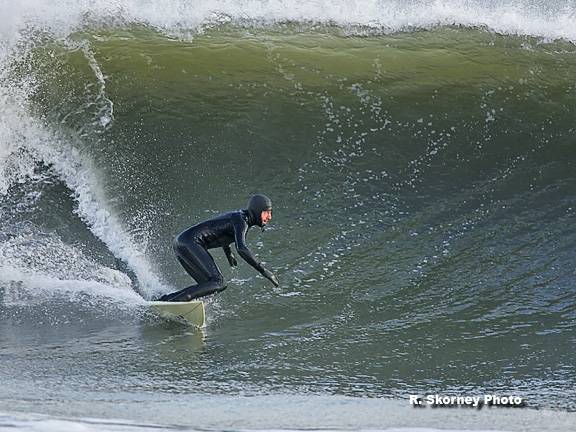
This past Thanksgiving I went for a morning surf in the Rockaways. It was a stormy, windy, rainy day and the waves were in the double overhead range (8-12 ft), water temps in the low 50s. It was a great day to be in the ocean.

Unfortunately, waves weren't the only thing I caught that morning...by the next day an infection was pulsing through my body, most likely from the polluted waters I had swam in the day before. Every time it rains more than a half-inch our city's wastewater system discharges raw sewage mixed with stormwater directly in our harbors and bays making for a bacteria and virus-laden cocktail.

Surfers are often the first to feel the effects of these conditions, but it has to make you think "If we are getting sick every time it rains, then what is happening to the aquatic life that lives in these waters?" Do we even know what the water quality is during rain events and what are the impacts on our ecosystem?"

Below are a few links to more information on water quality in NY and NJ. Combined Sewer Overflows (CSOs) are a significant problem that need a solution to prevent the continued dumping of pollutants into our local waters. There are some solutions that you can assist with at your home or business...things like conserving water when it rains or installing a green roof are just a sampling of the options available .

It starts with everybody from residents and businesses to government regulators and elected officials pitching in to solve this problem. The CMRC is looking forward to working with you to reduce the impacts of CSOs and improve our coasts, oceans and waterfronts in the year to come. See you in the water...JB

Images:
Rockaway Surf - Robert Skorney
Submerged CSO - www.reef-rescue.org

Water Quality (WQ) Links:

NYC Dept. of Environmental Protection
http://www.nyc.gov/html/dep/html/news/hwqs.html
Note: NYCDEP has NO real-time monitoring of WQ online!

NJ Dept. of Environmental Protection
http://www.state.nj.us/dep/beaches/
http://www.state.nj.us/dep/wmm/bmw/
Note: NJDEP has NO real-time monitoring of WQ online!

Surfrider NYC Water quality Testing
http://www.surfrider.org/bwtf/BWTFoutput.asp

CARP - Contamination Assessment & Reduction Project
http://www.carpweb.org/main.html

Southern California's Real Time WQ Monitoring
http://www.earth911.org/waterquality/default.asp?cluster=1

More about CSOs
http://www.seagrant.sunysb.edu/hep/pdf/hep_cso.pdf

Tuesday, December 05, 2006

In the News: On a Sliver of the Bronx, a Waterfront Respite

All along our estuary's waterfront, new access points are being opened to the public in an effort to regain our lost, but unbelievably rich, maritime heritage. The Bronx, lying in the far northern reaches of the NY - NJ Harbor Estuary, has often been the least accessible all of our region's waterfronts. In 2005, Mayor Bloomberg made a large first step in the right direction, providing a 600 foot-long stretch of access in Riverdale. Now we must continue to push forward until the entire coastline is accessible to all...JB

Photo: Bronx Waterfront/The CMRC

By Thomas J. Lueck
Published: December 5, 2006


I'm not sure how many people know how to get here, said Lisa San Felice, an amateur photographer, speaking last Thursday afternoon to the only other visitor to the Riverdale Waterfront Promenade and Fishing Access Site, one of New York City's least likely parks.

A tiny ribbon of land, the Riverdale park in the Bronx is 20 feet wide and 600 feet long, providing benches and a place to fish or take a stroll between Metro-North train tracks and the Hudson shoreline. Getting there involves stairs or elevators, crossing the railroad tracks on an elevated walkway and finding the gate to the park.

Since it was dedicated in 2005 by Mayor Michael R. Bloomberg, the Riverdale retreat has been hailed as an important step, or at least a symbolic gesture, toward providing more public access to the city's underutilized waterfront. But there has also been the awkward question of who
would actually use such a minuscule stretch of river frontage.

Read more:
http://www.nytimes.com/2006/12/05/nyregion/05ink.html

Bronx Borough Presidents Waterfront Plan
http://bronxboropres.nyc.gov/en/gv/president/waterfront.htm

Tuesday, November 21, 2006

In the News: The Coastline Is Retreating. Should the Montauk Lighthouse Stand Its Ground?

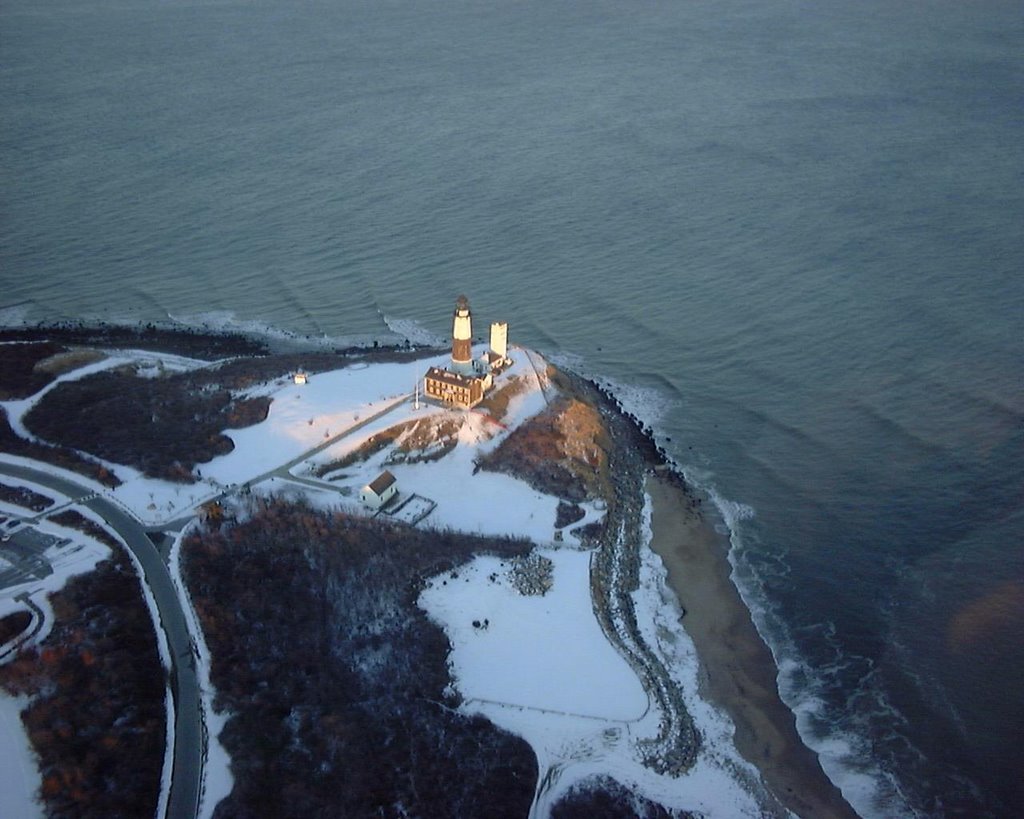
The debate rages on in Montauk regarding its charismatic lighthouse and how to address the ever-encroaching coastline below. Since the structure was built in 1796 (commissioned by George Washington no less!) the buffer between the sea and the towering lighthouse has shrunk from a generous 300 feet to a precarious 75. Now coastal managers, fisherman, surfers and local residents are left to decide whether to retreat or stand their ground...JB

Photo: Anders Brownworth (www.anders.com)

By Cornelia Dean
November 21, 2006


Lighthouses speak to the imagination. They illuminate the darkness, remind us of a vanishing maritime heritage and embody what it means to make it safely home.

So when erosion threatens to send a lighthouse toppling into the sea, people want to save it. But how? The way we answer that question involves more than engineering. It can become a statement about how we intend to live with our eroding coasts.

Read more:
http://www.nytimes.com/2006/11/21/science/earth/21comm.html

Video:
http://nytimes.feedroom.com/?fr_story=4db4f0511aac94767acc5b17838c7ab8d2600bfe

More on the Lighthouse Debate
http://travel2.nytimes.com/2006/11/14/nyregion/14light.html

Google Map of Montauk Lighthouse
http://maps.google.com/maps?f=q&hl=en&q=montauk&sll=40.694038,-73.999283&sspn=0.013796,0.019226&ie=UTF8&z=12&ll=41.058903,-71.899338&spn=0.109764,0.21492&t=h&om=1

Montauk Lighthouse
http://www.montauklighthouse.com/home.htm

Wikipedia - Montauk Lighthouse
http://en.wikipedia.org/wiki/Montauk_Point_Lighthouse

Thursday, November 16, 2006

CMRC Winter Waterfront Luau - Tuesday, December 19th

CMRC WINTER WATERFRONT LUAU ~~~ SAVE THE DATE!!!

Join the CMRC in celebrating a “superfine” year in coastal conservation. Drinks, food and some waterfront cheer.

CMRC WINTER WATERFRONT LUAU* Tuesday , December 19th ~~~ 6:00 – 8:00 PM* Superfine, Dumbo, Brooklyn (Map Link Below) * RSVP To: info@thecmrc.org

Details to follow. For more information please visit us at http://www.thecmrc.org/

http://maps.google.com/maps?f=q&hl=en&q=superfine&sll=40.694038,-73.999283&sspn=0.013796,0.021157&ie=UTF8&z=14&ll=40.70797,-73.993778&spn=0.027587,0.042315&t=h&om=1&iwloc=A

Wednesday, November 15, 2006

CMRC Virtual Estuary Project Now Online!!!

The CMRC's Virtual Estuary Project is an effort that aims to bring the experience of our coasts and waterfronts to residents throughout the NY-NJ region by using technology and media to convey the story of our coastal habitat, species and communities. We are proud to unveil the Virtual Estuary for the first time today at www.virtualestuary.org!

Please stay tuned for frequent updates and feel free to contact us at virtual.estuary@thecmrc.org with ideas, links or questions.
JB

Virtual Estuary Project Overview
The Virtual Estuary Project is an initiative that uses cutting-edge technology and interactive media to create an educational tool that explores the natural resources found within the coastal environment of the New York – New Jersey Harbor Bight.

Project Background
The Harbor Bight is home to one of the largest metropolitan regions in the world. It includes a population of 22 million residents, thousands of academic institutions and an international business community. Unfortunately, the extent of the region’s development puts tremendous stress on the health of the estuary's natural systems. The Virtual Estuary aims to reconnect residents with the coastal ecosystem through a variety of interactive educational tools that increase awareness regarding aquatic species and habitats while simultaneously conveying important conservation lessons to individuals and entire classrooms.

Virtual Estuary Overview
The Virtual Estuary Project is a partnership between the CMRC, Key East Consulting and Fallout Pictures that allow users to experience the Harbor Bight ecosystem through the use of computers and media players. Located at
www.virtualestuary.org, the website offers access to web-based media via multiple gateways. The primary interface will resemble Google’s mapping program (www.maps.google.com) and will include highlighted links to site specific media that showcases a variety of coastal features and topics such as: aquatic species, coastal habitat, waterfront communities and maritime history. It will be accessible first online where information will be downloadable to desktop computers and portable devices and then in a DVD format that will be distributed to after-school programs.

The Virtual Estuary Project includes the following components:

  • Online Map and Searchable Content Interfaces
  • Interactive Species and Habitat Modules
  • Downloadable “Flash” Videos and Podcasts
  • Web-Based Educational Games

By allowing residents to learn about the different species, habitats and coastal communities users will gain a better understanding of the resources and challenges facing our coastlines. Students and teachers will be able use the information to discover the ecology and maritime history of our region. Local residents will be able to experience the Harbor Bight in a new way by exploring our ecosystem and gaining knowledge through easily accessible cutting-edge technologies.

For more information please email virtual.estuary@thecmrc.org

Thursday, November 09, 2006

In the News: LI's wetlands are key to marine health

One of the biggest changes to our coastal landscape has been the significant loss of marine habitat to shoreline alteration. Historic maps of the region clearly show that thousands of acres of marshes and submerged lands have been lost (Health of the Harbor, pg 10). The end result, as reported in a recent issue of Science Magazine, is greatly reduced fisheries abundance and species diversity. In order to allow these species to recover, we must begin the costly process of restoring the miles of bulkheaded, filled and hardened shorelines to their natural state...JB

By Jennifer Smith
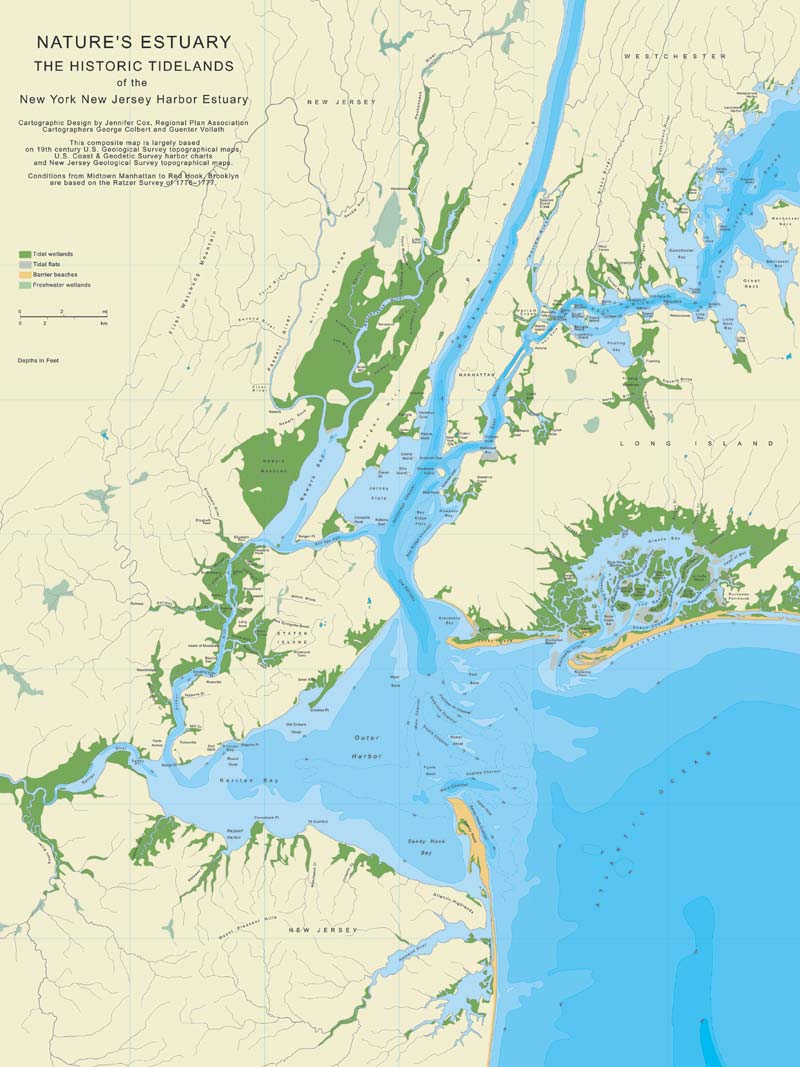
November 2, 2006

From the crash of the Great South Bay's once-abundant hard clam population to the near disappearance of eelgrass from the bottom of Long Island Sound, Long Island's coastal waters are no strangers to species loss.

This week a study in the journal Science took a larger look at how the loss of aquatic biodiversity -- the total number of fish and plant species in a habitat -- affects the ecosystems that nourish marine species.

In coastal areas, the study linked the regional loss of biodiversity with a decline of viable fisheries and impaired "nursery" habitats such as wetlands and seagrass beds, which shelter young fish.

Read more:
http://www.newsday.com/news/local/longisland/ny-hsloca1103,0,76050.story?coll=ny-longisland-homepage

Additional Coverage in Newsday - "Stability of marine life in severe danger"
http://www.newsday.com/news/health/ny-hssea1103,0,4706897.story?coll=ny-leadhealthnews-headlines

Op-Ed in NY Times - "The fishing industry lobbies Congress for the right to overfish. "
http://www.nytimes.com/2006/11/05/opinion/nyregionopinions/05LI-mcmurray.html

Image A - Crab Meadow, LI
Image B - RPA Map of Wetland Losses

Tuesday, October 31, 2006

In the News: Two More Ladies in the Harbor, a Floating Pool and the Woman Who Had the Idea for It

NYC Department of Parks introduced its new floating pool yesterday as it sailed into the Harbor (all the way from Louisiana!). The project is the vision of Ann Buttenwieser who, like many of us, is interested in attracting residents back to the waterfront. We here at the CMRC hope that this is just the first of many floating parks along our shores and also that one day we will actually be able to swim in, as opposed to on, our local waters again...JB

By James Barron
October 31, 2006


So yesterday the floating pool lady finally got to watch the Floating Pool Lady arrive in New York. The floating pool lady is Ann L. Buttenwieser, a former Parks Department official who had a brainstorm 25 years ago: Why not put a swimming pool on a barge and moor it somewhere along the city’s 578 miles of waterfront?

The Floating Pool Lady is the barge. Standing in a terrace garden in Lower Manhattan yesterday, Ms. Buttenwieser watched the Floating Lady float by after it glided under the Verrazano-Narrows Bridge and past Governors Island. It is now more pool than cargo hauler, but it is still not quite ready for its next life as a destination for dog-paddling, backstroking New Yorkers.

Read more:
http://www.nytimes.com/2006/10/31/nyregion/31pool.html

NYC Department of Parks and Recreation Pools
http://www.nycgovparks.org/sub_things_to_do/facilities/af_pools.html

Swim NYC - Manhattan Island Foundation
http://www.swimnyc.org/

Image:Floating Pool Arrives in NYC. Tyler Hicks/NYTimes

Thursday, October 26, 2006

Business Stewardship Speaker Series - November 7th 2006

BUSINESS STEWARDSHIP SPEAKER SERIES NOVEMBER 2006

RETAIL BUSINESSES AND RESOURCES FOR COASTAL CONSERVATION

Hudson River Foundation
17 Battery Place, Suite 915
November 7th, 2006
9:00 – 10:15 AM

Agenda for Business Stewardship Speaker Series

9:00 AM Introduction to Business Stewardship Speaker Series
Joel Banslaben – Executive Director, CMRC

9:10 AM Building the Sustainable Retail Business Model
Mark Caserta – Owner, 3R Living

9:20 AM Street Sweeping Program in SoHo & Tribeca Business Districts
James Martin – Coordinator, Soho & Tribeca Street Sweeping Services
Eric Klapper – Director of Development, Soho & Tribeca Partnerships

9:30 AM Automotive Service Stations & Used Oil Recycling
Shino Tanikawa – District Manager, NYC Soil & Water Cons. District

9:40 AM Creating Solutions for Business Stewardship
Working session to formulate basic principles on retail business stewardship. Concepts will be incorporated directly into outreach materials to be circulated to local businesses. Topics will include:
· Waste Reduction
· Energy & Water Conservation
· Volunteerism

10:15 AM Adjourn:
The Speaker Series will be followed by an open meeting of the New York Chapter of the Corporate Wetlands Restoration Partnership (NY-CWRP) from 10:30 AM – 12:30 PM. For more information please visit: http://www.cwrp.org/newyork.html

To RSVP please email business.stewardship@thecmrc.org or for more information please visit www.thecmrc.org!

Tuesday, October 24, 2006

In the News: The Biologist and the Sea, Lessons in Marine-Life Restoration

It is easy to forget, in today's day and age, that the marine life on our dinner tables comes from the waters around us. This disconnect and consequent decades of unsustainable fishing practices have led to the demise of several aquatic species. Today, with protection measures in place, many species are rebounding. But, as Biologist and Blue Ocean Institute Founder Carl Safina claims, we need to stay connected to our local coastal ecosystem and develop a "Sea Ethic" to ensure a sustainable balance between nature and our species. JB

Fishing With Carl Safina. The Biologist and the Sea: Lessons in Marine-Life Restoration
By Andrew C. Revkin


MONTAUK, N.Y. For Carl Safina, a biologist, conservationist and prize-winning author, passions and intellectual pursuits are deeply entwined.

The best place to observe this fusion is aboard his 24-foot powerboat First Light at the time of day for which it is named, when Dr. Safina is scanning flocks of terns hovering over the tide-roiled waters between Montauk, the tip of Long Island, and the slate-dark hump of Block Island to the east.

Dr. Safina's doctoral thesis was on the interrelated behaviors and annual rhythms of the common tern and bluefish, which feast on the same bay anchovies and other small prey.
On many days, though, he is carefully tracking the birds not in pursuit of new knowledge, but in hope they will point him to dinner.


On a recent three-hour fishing trip, in snippets of windblown conversation while steering his boat, jigging or casting, then fighting, landing and cleaning fish, Dr. Safina reflected on two decades of work revealing the enormous disruption of ocean ecosystems by industrial-scale fishing and other human activities.

Read more:
http://www.nytimes.com/2006/10/24/science/24conv.html

Video
http://nytimes.feedroom.com/?fr_story=9edb7d48436db6048d7c7b7d0a5560a316f848cc

Blue Ocean Institute
http://www.blueocean.org/

Image: Fishing in Jamaica Bay
Courtesy - One More Cast